
 Prospecting and Intros
Stand out and improve response rates.
 Sales
SalesGenerate more pipeline and close more deals.
 Post-Sales
Keep customers engaged after the deal closes.
 Marketing
Host video content and convert viewers into leads.
 Converting and Closing
Connect with buyers and close more deals.
 Corporate Comms
Create and deliver an internal communications strategy.
See Vidyard in Action →
“Personalized Vidyard video messages drove an 8x improvement in click-through rates and a 4x improvement in reply rates.” Read More
 Blog
BlogThe secrets to virtual selling and video best practices.
 Video Agent Hub
Case studies and how-to videos for every revenue use case.
 Help Center
How-to and help articles for all things Vidyard.
 Fast Forward
Expert advice on all things virtual selling.
 Templates
Free sales templates for every stage of the deal cycle.
 Use Cases
Explore real ways to use video across your business.
 AI Resource Hub
Guides and ideas for using AI in your workflow.
 Case Studies
Learn how our customers win more with Vidyard.
 Live Workshop Series
Showing you exactly how to put video to work.







Adia Toll’s opt-in playbook: A 78% reply rate on cold outbound video
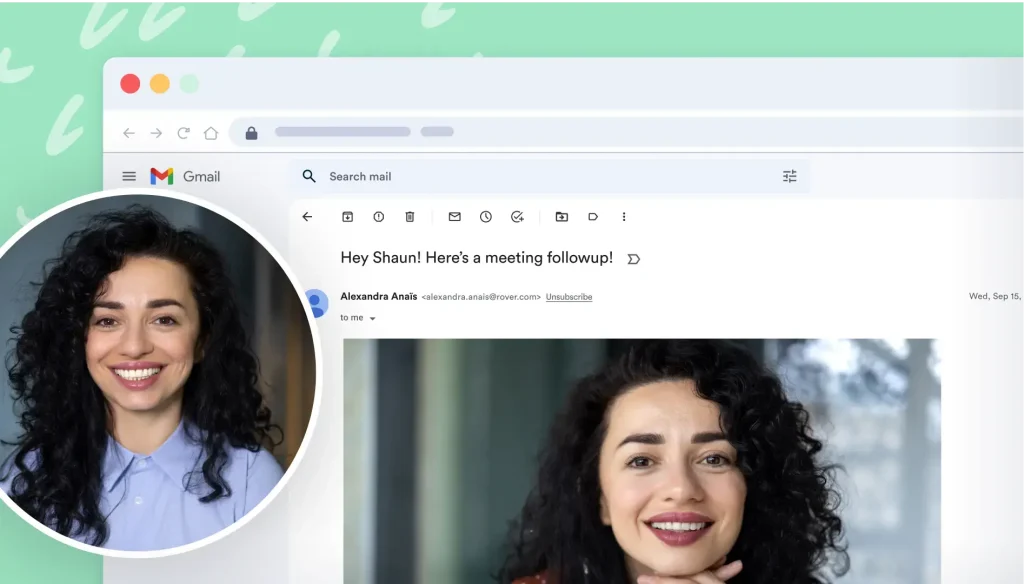
Adia Toll doesn’t send a cold video and hope. She asks first, then backs that permission with an embedded video and a meeting link built into every send. The result is a 78% reply rate across her team and a meeting booked roughly one in five times when video is part of her sequence.
A video-first BDR leader
Adia came to AskElephant already sold on video as a prospecting tool. She’d used Vidyard in a previous role, and when she took over outbound at AskElephant, she wanted a way to get video in front of prospects with as little friction as possible. That search led her back to Vidyard.
Her method: Ask before you send
Adia’s core move is one she pulled from cold-calling: open with a question the prospect can say yes or no to, so they opt in before you pitch. Applied to video, that means asking, “Would you rather I send you a video or give you a call?” instead of dropping a video cold. It’s a framework she built and now runs across her whole team.
There’s a ton of power in the opt-in. If I send you a video completely cold, you haven’t said yes to it, and you’re much more likely to ignore it. But if I ask, ‘Would you rather I send you a video or give you a call?’ now I’ve given you a chance to say yes to something. There’s a commitment you’ve created. — Adia Toll
Her 5-step direct message sequence
Adia has turned the opt-in into a specific, repeatable play she runs over LinkedIn direct messages. She reaches for it in particular when a prospect has shown some signal of interest, an ad click, a profile view, a post like, but she doesn’t have enough of a hook to reference it directly without it feeling invasive.
The sequence runs in five steps: ask a specific, easy-to-answer question, let the opt-in ask follow once they reply, send a 30-second personalized video message, qualify from there, then close with the meeting link.
The opt-in message itself is a script she reuses with light personalization:
“Would you watch a 30-second video about how [title] use [product or service] to accomplish [big picture outcome] if I put one together for you?”
She’s deliberate about what that question does. It makes the prospect the hero of their own reply. A yes is a real agreement to watch, and a no tells her the value prop wasn’t relevant before she’s spent any time making a video.
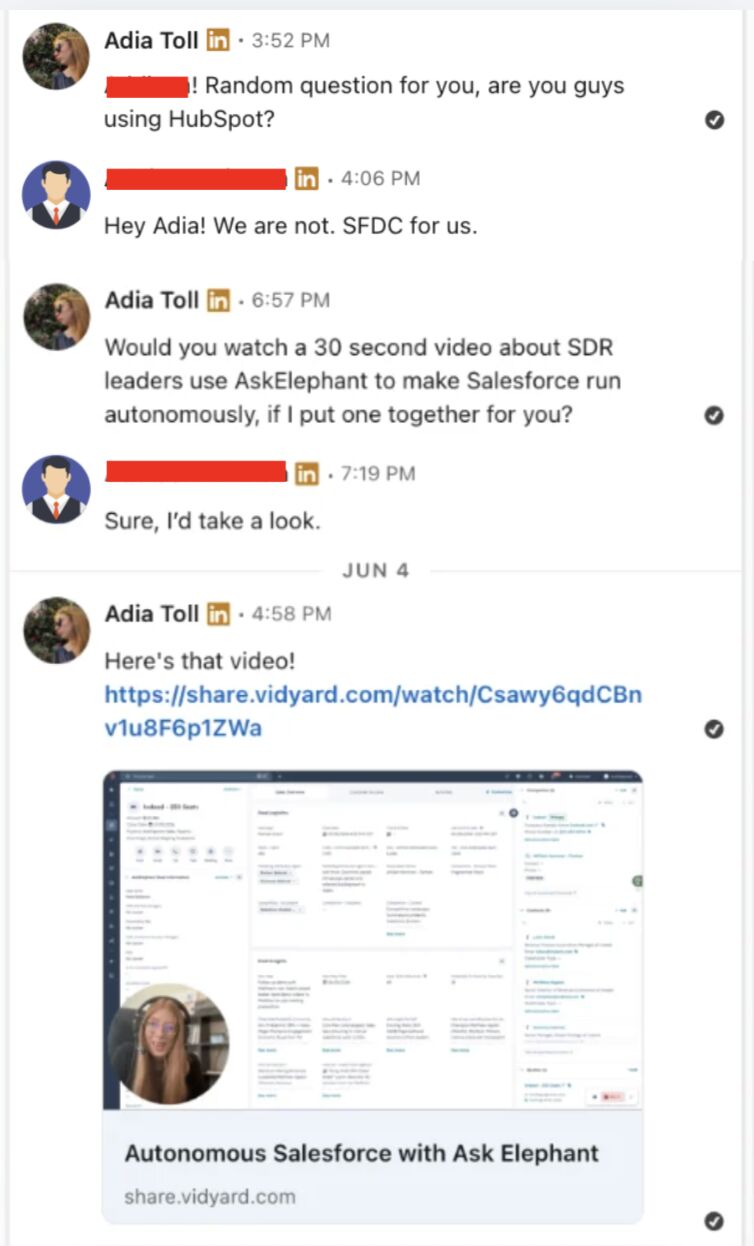
For the video itself, Adia aims for 60 seconds and sets the default play speed to 2x. She builds it around the method a prospect would use to get to the outcome she mentioned, not a list of features, so it plays like a narrative about how the product fits into their world rather than a pitch.
About 30 minutes after sending, she follows up with a discovery question designed to nudge them toward watching, something like, “If this was relevant, what would you want to report on in your sales cycle?” Only then does she ask for the meeting.
What native embed changed for her
For Adia, the payoff of the opt-in got bigger once the video itself felt like part of the conversation instead of a link to click away to. A Vidyard video plays natively inside LinkedIn messages, and she noticed the difference right away.
The moments I love most are anytime Vidyard can be embedded, like when it’s in LinkedIn and it looks like it’s just naturally part of the conversation, or it’s in an email and it looks like it’s just in the email. There’s not this separate webpage they have to go to. The actual watch rates are much higher. — Adia Toll
The embedded CTA
Adia builds a Vidyard meeting-scheduling link into the end of every video she sends. She’s candid that it rarely closes the loop all by itself. Most of her meetings still get booked after a follow-up call or message. But she credits the embedded link with doing real work upstream, putting the meeting in the prospect’s head before she has to ask for it.
I care a lot more about the CTA being embedded into the video, like the fact that I can take them to my meeting link at the end. Even if they don’t convert, it’s so much easier to ask for the meeting after that and to get a yes. — Adia Toll
Video that pulls its weight
Adia’s team sees a 78% reply rate on outbound, and roughly one in five sequences with video in them ends in a booked meeting. She’s confident in what video is doing for those numbers, even though attribution in outbound isn’t always crystal clear.
A typical path: she messages a prospect on LinkedIn, offers a video instead of a call, sends it, potentially hears nothing back, then follows up with a call that finally books the meeting. Even when the meeting shows up as booked on the call, Adia is clear that the video did significant work in warming the prospect up to say yes.
Her efficiency math
Adia has run the numbers on what this actually costs in time. A 60-second video takes about three minutes to record. Prospects watch it back at double speed, so it moves fast on their end too. At roughly 10 videos a day, that’s still under an hour of time creating videos.
At her team’s conversion rate, that’s roughly two booked meetings a day, from an hour of video work alone.
If we’re only doing this on our ICP, top-tier accounts, let’s say we’re doing this 10 times a day. That’s still less than an hour a day going to making videos. And with the conversion rate we have, that means I’m guaranteed out of 10 to get two meetings every single day, just from the videos. — Adia Toll
Adia Toll is a BDR leader and a prominent voice in the outbound space, known for turning sales plays into frameworks other reps can actually run. She shares her playbooks openly, breaking down not just what she does but the reasoning behind it, so other outbound leaders can adapt it to their own process..




See why the best sellers use video