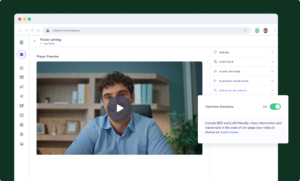

 Video Messages
Record personal videos to reach more customers.
 Video Agent New
Automatically send personalized videos with agentic AI.
 Vidyard Hosting
Manage all your business videos in one central spot.
 Vidyard AI Avatars
Generate personalized AI videos at scale.
 Vidyard HubsSee All Features →
Curate and share your best videos in one branded page
 Prospecting and Intros
Stand out and improve response rates.
 Sales
SalesGenerate more pipeline and close more deals.
 Post-Sales
Keep customers engaged after the deal closes.
MarketingHost video content and convert viewers into leads.
 Converting and Closing
Connect with buyers and close more deals.
 Corporate Comms
Create and deliver an internal communications strategy.
See Vidyard in Action →
“Personalized Vidyard video messages drove an 8x improvement in click-through rates and a 4x improvement in reply rates.” Read More
 Blog
BlogThe secrets to virtual selling and video best practices.
Video Agent HubCase studies and how-to videos for every revenue use case.
 Help Center
How-to and help articles for all things Vidyard.
 Fast Forward
Expert advice on all things virtual selling.
 Use Cases
Explore real ways to use video across your business.
AI Resource HubGuides and ideas for using AI in your workflow.
 Case Studies
Learn how our customers win more with Vidyard.
 Live Workshop Series
Showing you exactly how to put video to work.






Are AI Avatars trustworthy? What sales teams need to know
Jan 27, 2026
·
8 mins

Laura Wilkinson
AI Avatars raise trust concerns, but transparency and proper use build credibility
TLDR: Here’s how you can implement and measure the trustworthiness of AI Avatars across your entire organization.

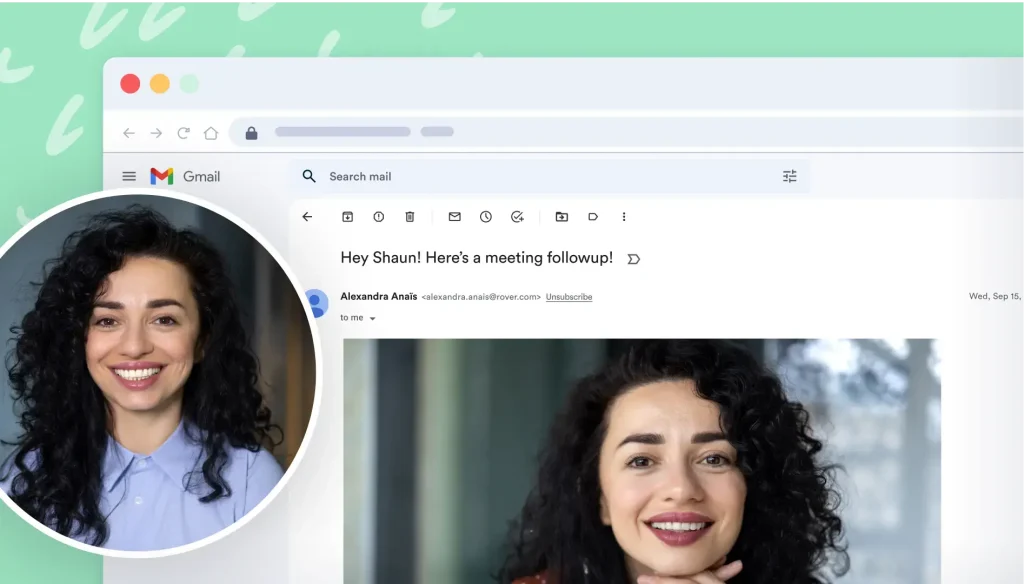
AI Avatars might sound like science fiction, but chances are you’ve probably already seen one. Whether on social media or via a personalized sales video message, AI Avatar video content is the future, and we’re already living in it.
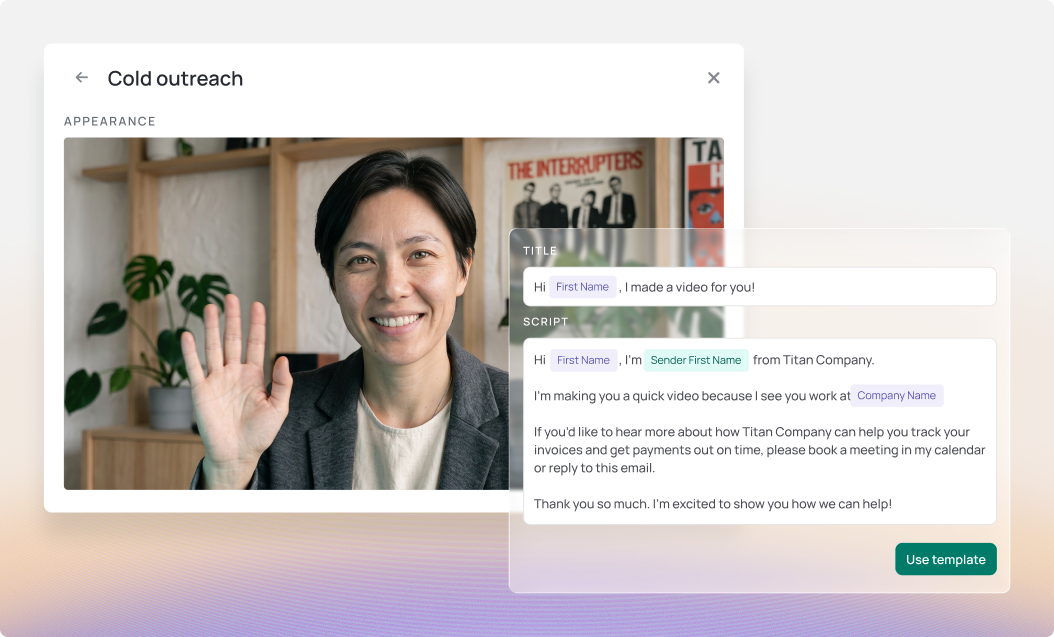
Revenue teams use AI Avatars to personalize touchpoints across the customer journey. Use cases range from sales prospecting to customer education and customer success. Think of it as an AI-powered tool in your toolbox to increase efficiency and personalization.
It’s important to note that AI Avatars are not meant to replace sellers or human-to-human interactions. Instead, they are a way to extend someone’s presence when they cannot be everywhere at once. When a prospect sees the face of the person reaching out, even as a digital likeness, it sparks a level of connection and familiarity that a text-based messages alone cannot. The technology supports the most routine touchpoints in your funnel (like a sales introduction, or onboarding welcome) so your team can stay focused on the conversations that require their immediate time and attention.
In our 2025 Future of Revenue Report, 39% of revenue teams said they have fully implemented AI powered video tools, and every one of those teams reported higher win rates. The quality has improved, the workflows have become easier, and GTM teams are finding real value.
At the same time, we know many sellers still have questions about how buyers will respond. Those questions are valid. In this piece, we walk through how to use AI Avatars in a way that supports trust, sets the right expectations, and strengthens customer relationships.
How AI Avatars build trust and when to use them (or not)
Okay, now that we’ve called out the elephant in the room, let’s talk about how and when AI Avatars actually build trust.
High-trust use cases for AI Avatars
The key to choosing the right use cases for AI Avatars is simple: If it’s a scaled message you’d normally send using an email template, it’s probably a great fit for an avatar video. Avatars let you share the same information in a more engaging, human way—without sacrificing efficiency. You can still personalize the details that matter, like a customer’s name, company, or key pain points, while using video to make the message feel warmer and easier to connect with. Below are some common use cases where AI Avatars really shine.
- Routine updates and follow-ups: For customers you can send them your latest product announcements, ideally customized based on the top features they’re already using. Internally, use them for cross-team communication or meeting follow-ups.
- Scalable onboarding: They can enable personalized welcome messages for every new customer or employee, ensuring no one gets overlooked.
- Multi-stakeholder engagement: Reach all decision-makers with tailored messages without logistical delays or super long text-based emails.
- Time-sensitive communications: Deliver important information immediately rather than waiting for calendar availability.
- Consistent messaging: Ensure every prospect receives the same high-quality touch-points and information regardless of rep availability or seniority.
Starting with internal communications can help you get comfortable with the AI-generated you and see how your message lands with others.
When a manual video is essential
Even with all the benefits of scaled personalization, AI Avatars aren’t always the right choice for every message. Our platform started as a solution for sellers to easily record and share video messages, and many times, this manual style of video is still best.
Here’s when we recommend getting in front of the camera yourself:
- Build connection: After your AI Avatar breaks the ice, a manual video helps you deepen the relationship and build trust.
- Initial relationship building: First impressions benefit from real human presence once interest is established.
- Complex objection handling: Nuanced conversations require real-time adaptation.
- High-stakes negotiations: Major decisions deserve personal attention.
- Sensitive topics: Empathy and emotional intelligence require human authenticity.
- Crisis communication: Trust repair demands genuine human accountability.
And of course, sometimes pre-recorded videos aren’t the answer at all.That’s when picking up the phone or meeting in-person really shine.
A blended approach for AI-generated and manually recorded video
Teams that see the strongest lift from AI video are the ones with clear guidelines, human follow-through, and thoughtful timing across the sales process. Our 2025 Future of Revenue Report found that the revenue teams who fully adopted AI-powered video all reported higher win rates. The common thread is a blended approach that pairs the scale of AI with the personal touch of human outreach.
Here’s what they’re doing:
- 62% use AI-assistant analytics to measure performance
- 54% use AI script generators
- 49% track engagement for optimization efforts
- 46% automate video creation and delivery based on buyer behavior
- 36% use predictive lead scoring to prioritize who receives video
Check out the full details in our Future of Revenue Report.
Understanding trust concerns around AI Avatars
Despite remarkable quality improvements in AI-generated video, some folks still feel uneasy about AI Avatars. But here’s the truth: the real concern isn’t the technology itself; it’s governed use versus ungoverned use.
When AI Avatars are deployed through enterprise platforms with proper controls, consent frameworks, and security measures, they build trust. When they’re used without governance, that’s when problems arise, such as security/misuse risks, inappropriate use cases, and broken trust (not to mention people feeling creeped out.)
The authenticity question
People worry that AI Avatars might come across as fake or misleading. That concern makes sense. When it is not clear how a video was created, viewers might question the sender’s intentions. That’s why we recommend being transparent with your avatar usage, whether that’s via a digital watermark or starting your script with a brief acknowledgment that you’re using an avatar.
Once you tell viewers upfront that you’re using an avatar, they stop wondering and just focus on your message. – Jordan Sanders, CSI Accounting & Payroll
As AI Avatar videos become more realistic, authenticity has less to do with video quality (e.g. lip sync and accent) and more to do with how teams choose to use it.
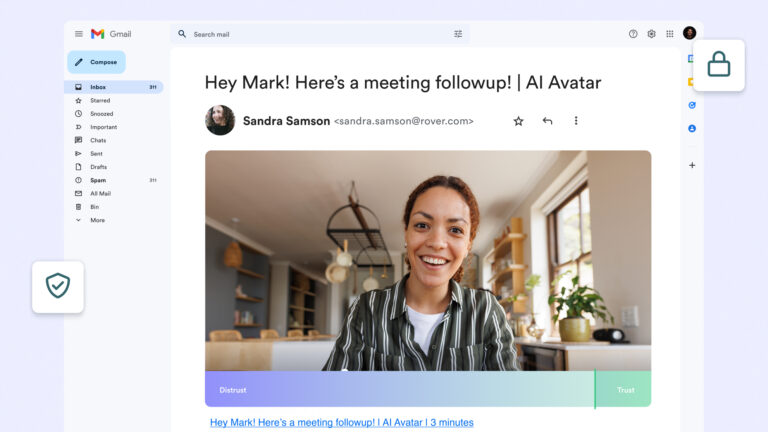
Trust is a spectrum. Here’s how we think about it:
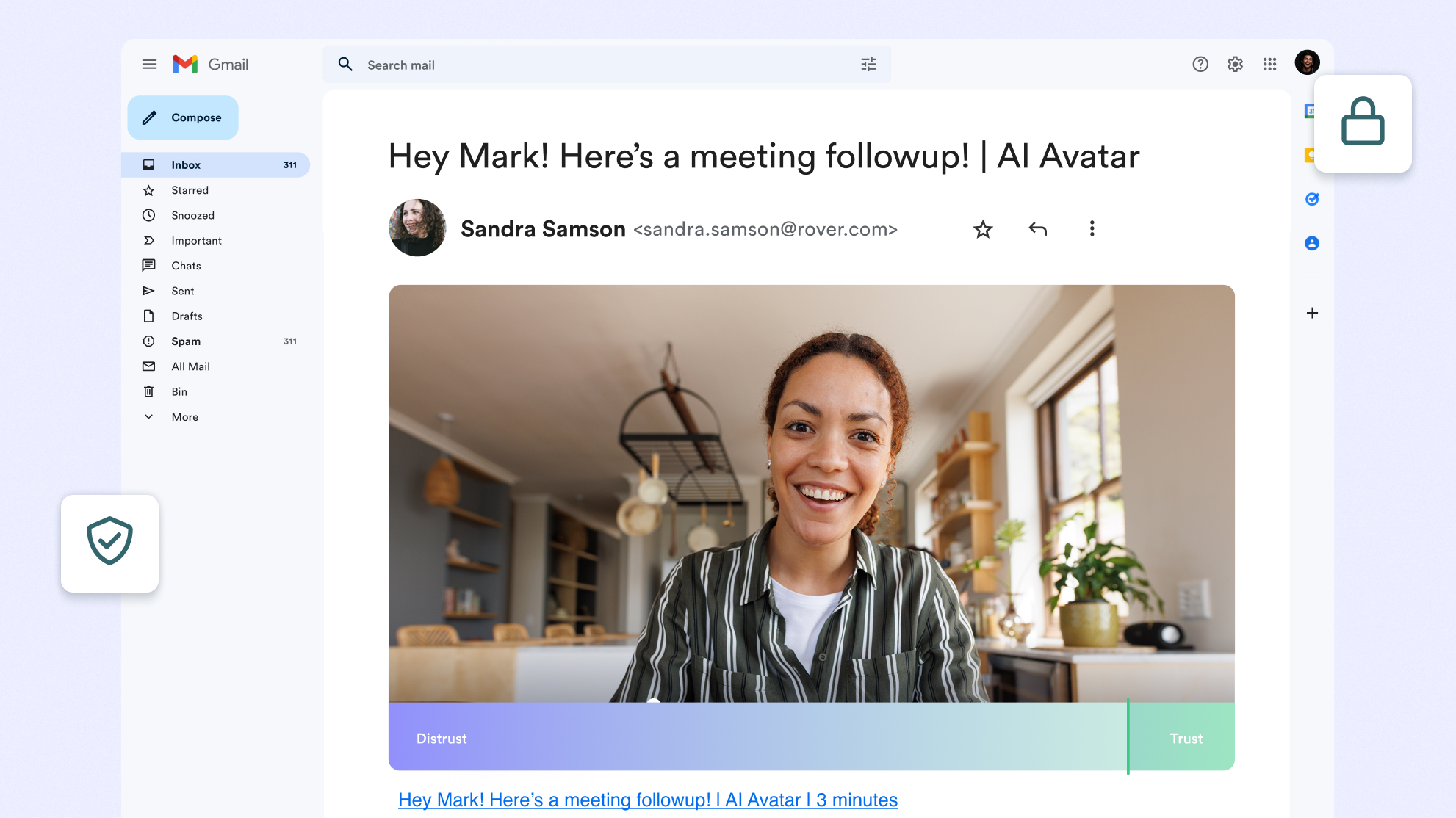
Being upfront about using AI Avatar videos is a best practice at this stage of adoption. It automatically creates appropriate expectations and understanding in the viewer’s head, especially when the content is timely, thoughtful, and relevant. That said, disclosure is ultimately a choice teams make based on their specific context and audience. It’s one powerful trust-building tool in your toolkit, not a strict requirement.
Security and deepfake risks
From solo operators to the biggest enterprises, we know cybersecurity concerns are at an all time high. And they should be! The rise of audio and video deepfakes being deployed to scam consumers and businesses have already made national headlines.
That’s why working with a provider that takes your concerns seriously is critical. There is a huge difference between a consumer application downloaded from the AppStore and an enterprise-grade solution when it comes to creating, sharing, and maintaining this technology.
You need a platform that takes data protection, consent, and using your personal likeness seriously. The top AI Avatar tools built for business out there do just that (and more!)
Deploying AI video with full transparency
Transparency is one of the strongest ways to build trust when using AI Avatars.
Here’s how you can ensure buyers receiving these videos understand and are fully on board.
Disclosure best practices
However you choose to implement AI Avatars into your workflows, we recommend disclosing that videos are AI-generated. You can put this in the video script itself or in the body of an outreach email.
This can be as simple as: “We’ve created this personalized video message using [company name], an AI-powered video platform.”
Disclosures increase engagement because they set proper expectations and ensure transparency.
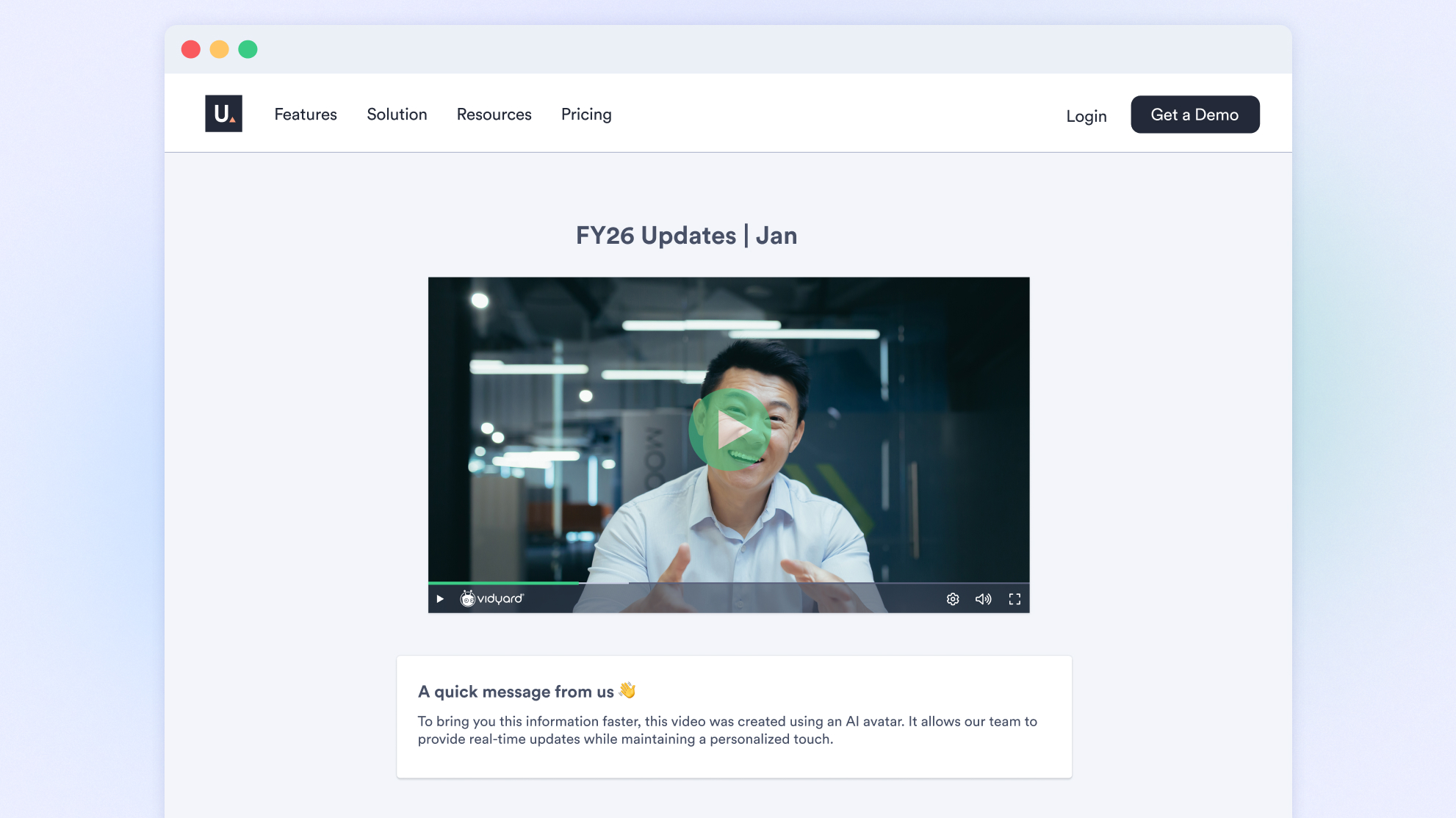
Setting appropriate expectations
Speaking of setting expectations, you should not only do this externally but internally. Framing AI Avatars as a tool for scaling personalization, not replacing human connection can streamline adoption.
Externally, you can use phrases like: “I created this video for you” or “I’m so excited about our upcoming meeting, I had to send you an avatar video.”
Quality and realism standards
What does a high-quality AI Avatar video look like? You watched one at the top of this blog post!
But in case you didn’t watch it, here’s another:
While this might sound contrary, professional-quality, human-like AI Avatars that look clearly produced can appear far more trustworthy than attempts at perfect realism. It’s all about not creating that uncanny valley feeling while maintaining branding, quality, and production value.
Security and privacy in an enterprise environment
Considering the headlines around AI-generated deepfakes and bad actors, you may feel nervous about bringing up AI Avatars to your CISO.
We get it. That’s why we put together this security checklist to help you start the conversation and answer their concerns.
Data protection and consent
Video platforms designed for businesses should have data protection and consent at their core.
- How enterprise AI Avatar platforms handle personal likeness and voice data.
- Consent frameworks and user control over avatar usage.
- Compliance with privacy regulations (GDPR, CCPA, etc.).
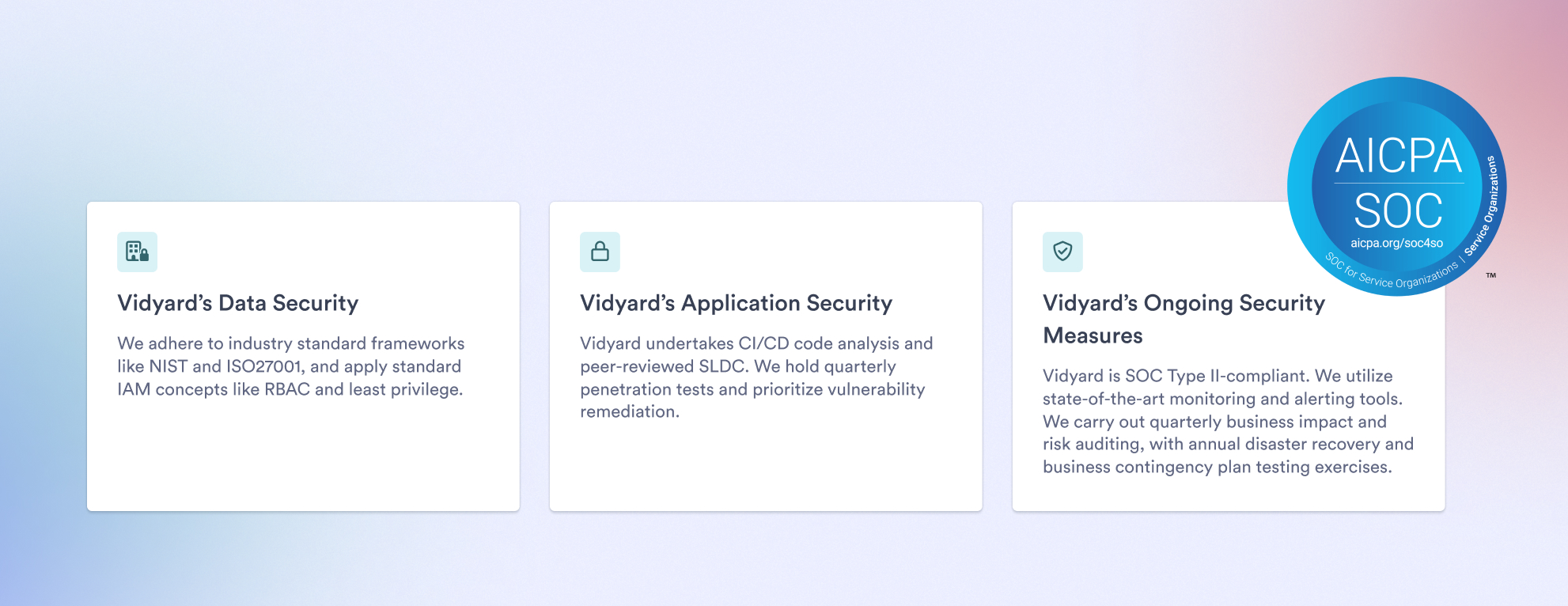
The best AI Avatar platforms include built-in consent and security safeguards. They verify identity during the training and consent process, store likeness and voice data securely, and give users full control over how their avatars are used. When these protections are in place, teams can adopt AI Avatars with confidence and stay aligned with their security, privacy, and compliance requirements.
Preventing misuse and deepfakes
They will also have built-in security features that prevent unauthorized avatar creation or use, including authentication and verification systems. After an employee leaves the company, they should also enable the easy deletion of their account and any AI Avatar videos the company does not have long-term permissions for.
Speaking of which, you should also ensure you have internal policies about what will happen to video content, both human and AI-generated, after someone leaves, especially if it is publicly available.
Platform security standards
As with any new AI tool you’re evaluating, you’ll want to make sure that the platform you’re using has encryption, access controls, audit trails, and meets compliance standards like SOC 2 or has an ISO certification.
Measuring trust for your AI Avatar videos
If you’ve started using AI Avatar videos in your internal or external communications, it’s important to understand how they’re landing with your employees, customers, and prospects. Are they driving engagement? Building trust? Actually helping your message resonate? Measuring reception goes beyond views alone—it’s about understanding impact.
Below, we’ll walk through practical ways to evaluate how your AI Avatar content is being received and where it’s delivering the most value.
Engagement metrics that signal trust
- View completion rates (do people watch to the end or drop off immediately?)
- Click-through rates on CTAs (are people taking suggested next steps?)
- Reply rates and meeting booking rates (are people responding positively?)
- Unsubscribe rates and negative feedback (are people opting out?)
Qualitative trust indicators
- Feedback from prospects and customers about their video experiences
- Team confidence in using AI Avatars
- Consistency between AI Avatar messaging and brand values
- Engagement on AI Avatar videos versus human-created personalized video messages
Real-world evidence: AI Avatars and trust in practice
Now that you know how to implement AI Avatars in a thoughtful way that builds trust, here are some real-world examples of companies using them today.
Vidyard case study examples
Shakir, the CEO and head of sales at ReviewThatPlace.com, a digital solutions company, found it challenging to make the brand stand out and grab attention. He started leveraging Vidyard’s AI Avatars to efficiently create personalized video cover letters for every proposal. With just this change, he experienced an impressive 760% surge in proposal views and a 400% boost in his open-to-meeting rate!
Here at Vidyard, we believe in drinking our own champagne. That means when we launched our AI Avatars, our sales team immediately started using them across the sales process. One of our BDRs was able to generate over 300 personalized outreach videos in two days, inviting them to visit the Vidyard booth at Hubspot Inbound 2024. Overall, our team achieved 4X increase in meetings booked, 2X higher video view-through rates, and drastically reduced no-show rates.
CSI Accounting & Payroll blends 1:1 video with AI Avatars to scale communication, improve client engagement, and boost productivity while easing on-camera barriers.
The business believed in video as a powerful tool for bringing the framework to life – educating customers and building trust through authentic connection and storytelling. They also saw an opportunity to scale their video strategy with AI.
What top performers do differently
Our 2025 Future of Revenue Report revealed that top performers are being transparent: 76% say that transparency around AI-assisted outreach improves buyer response. They do this through a combination of telling others they’re using AI-assisted video creation and implementing guardrails for their teams like messaging, branding, and human oversight.
Common mistakes and how to avoid them
As we all know, it can be pretty easy to lose trust, especially in the early stages of building a business relationship.
When it comes to AI Avatar usage, there are a few clear ways this can happen:
- Trying to pass AI Avatars off as live video (breaks trust immediately)
- Using AI Avatars for every communication (feels impersonal)
- Poor-quality AI Avatars that fall into the uncanny valley can cause discomfort
- Lack of human follow-through (AI Avatar promises that humans do not keep)
Vidyard: The trust layer for AI video
We wouldn’t be talking about trust in AI Avatars if we weren’t committed to it ourselves. At Vidyard, we build every part of our platform—including our Video Agent —with privacy, security, and trust as core principles.
Transparency and ethical use aren’t add-ons; they’re built into how our technology works. Below are some of the ways Vidyard helps teams use AI Avatars responsibly, while maintaining authenticity and brand integrity.
Built-in transparency features
- How Vidyard makes it easy to use AI Avatars ethically and transparently
- Branding capabilities, and quality controls
- Integration with CRM systems to maintain consistent, authentic communication
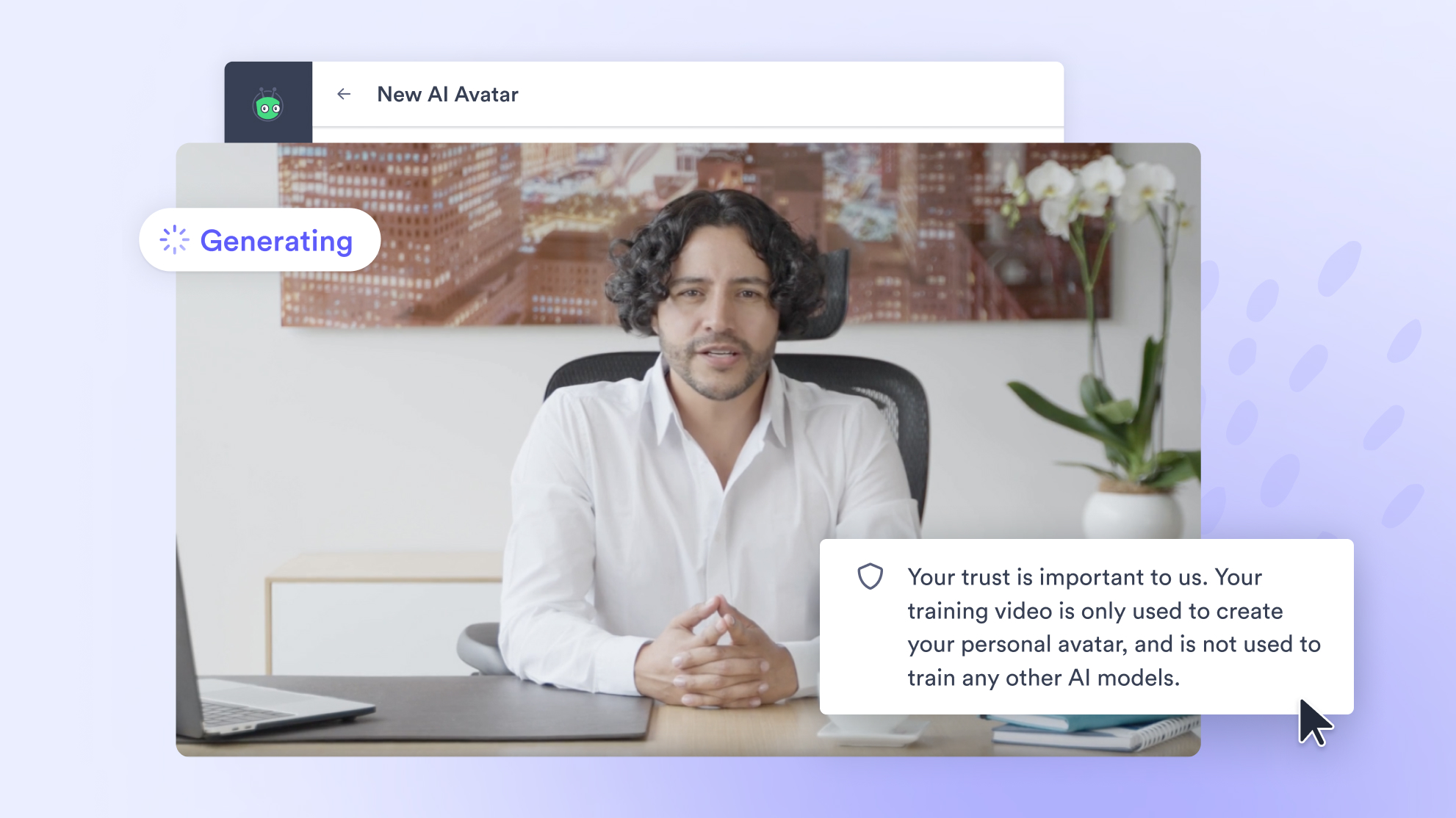
Enterprise security and compliance
- Vidyard’s security standards, certifications, and data protection practices.
- How Vidyard handles personal likeness and voice data.
- Controls that prevent misuse and maintain user trust.
Vidyard’s philosophy on AI Avatars
We believe that AI Avatars should empower sellers to be more human in their communication with customers and prospects, not less. When used transparently they can make your efforts more scalable while building trust and freeing up your team’s time for high-value human interactions.
That’s why we see that our highest-performing customers are using a strategic combination of AI Avatars and personalized video messages.
The future of trust and AI Avatars
AI Avatars are not a future concept. They are a tool revenue teams are choosing to use today. The real question is not whether to use them, but how to introduce them in a way that supports trust and strengthens relationships.
The technology will continue to improve, and so will the systems that help teams use it responsibly. That is why we built Vidyard with consent, security, and quality standards at the center. Our goal is to make it simple for teams to work at scale without losing sight of the trust their buyers expect.
So, are AI Avatars trustworthy? Yes, when they are used in a governed environment that protects data, maintains consent, and keeps expectations clear. The teams seeing the strongest results are the ones choosing platforms that make responsible use the default, not the exception.
Have questions or want to get an in-depth demo of Vidyard’s AI Avatars? Book a demo with our team today (or go ahead and jump in and create your own 15 free AI Avatar videos for free!).
Frequently asked questions
Are AI Avatars legal to use in sales and marketing?
Yes, if you use a platform that follows all compliance laws and you let recipients know, AI Avatar videos are legal.
Are AI Avatars safe?
Yes, AI Avatars can be safe to use across your business if you partner with a provider who takes security, privacy, and compliance seriously. Your team should also develop internal guidelines for using this technology.
Do I need to tell people when I’m using an AI Avatar?
Yes, we recommend telling people you’re using AI Avatars.
One way to do this is to say: “I made this video for you using our AI-powered video tool…”
Will prospects trust me if I use an AI Avatar?
Prospects are far more likely to trust teams that are transparent, provide value, and follow-up with human-to–human communication.
How do I know if my AI Avatar platform is secure?
B2B AI Avatar video tools should provide information about their compliance and cybersecurity practices publicly. You should also be able to test their tools and communicate with appropriate individuals at the company to ensure safety and security.
What’s the difference between AI Avatars and deepfakes?
AI Avatars are consent-based, ethically designed digital representations used for legitimate purposes such as sales, training, or customer engagement. Deepfakes, on the other hand, are often created without permission and are typically intended to deceive or impersonate someone. The key differences lie in consent, transparency, and the intention behind how the technology is used.
Can AI Avatars actually improve trust compared to text-based outreach?
Yes, and we have the data to back us up. Check out our case study with ReviewThatPlace highlighting how they’ve been able to achieve a staggering 760% increase in proposal views, as well as a 400% increase in his open-to-meetings rate.
When should I use a human video instead of an AI Avatar?
You should use a human video when authenticity, emotion, and personal presence are essential to your message. Situations like high-stakes sales calls, sensitive communications, relationship-building moments, or messages that rely on genuine tone and body language are best delivered by a real person. While AI Avatars are great for scale, speed, and consistency, human videos remain the strongest choice when trust and emotional connection matter most.
How do I measure whether my AI Avatars are building or eroding trust?
You can measure whether your AI Avatars are building or eroding trust by closely tracking how your audience responds over time. Look at engagement metrics like video views, watch time, replies, and meeting conversions to see whether people are interacting more or less after introducing AI-generated content.