
 Prospecting and Intros
Stand out and improve response rates.
 Sales
SalesGenerate more pipeline and close more deals.
 Sales Support
Set your sales team up for success.
 Marketing
Host video content and convert viewers into leads.
 Converting and Closing
Connect with buyers and close more deals.
 Corporate Comms
Create and deliver an internal communications strategy.
See Vidyard in Action →
“Personalized Vidyard video messages drove an 8x improvement in click-through rates and a 4x improvement in reply rates.” Read More
 Blog
BlogThe secrets to virtual selling and video best practices.
 Video Agent Hub
Case studies and how-to videos for every revenue use case.
 Knowledge Base
How-to and help articles for all things Vidyard.
 Fast Forward
Expert advice on all things virtual selling.
 Templates
Free sales templates for every stage of the deal cycle.
 FAQ
FAQGet the answers to your top Vidyard questions.
 AI Resource Hub
Guides and ideas for using AI in your workflow.
 Case Studies
Learn how our customers win more with Vidyard.








Future of Revenue
How agentic AI and video are reshaping GTM strategies in 2025
Discover how top revenue teams use video and agentic AI to scale personalization, accelerate pipeline, and close more deals faster. Use these exclusive insights to future-proof your GTM strategy today.

Report highlights
93%
of revenue leaders leveraging video
16 hours
saved weekly using agentic AI tools
92%
of leaders say video is an essential part of their revenue strategy
Insights from this survey were gathered from 656 full-time sales and marketing professionals in April 2025.
Understanding the current go-to-market landscape
Today’s buyers are overwhelmed with impersonal outreach.
Their inboxes are bursting with generic emails, and as their tolerance for irrelevant marketing shrinks, their hunger for authentic human connection is growing. At the same time, a new wave of agentic tools is radically reshaping the go-to-market landscape. These intelligent solutions don't just automate—they enable personalized, engaging experiences at unprecedented scale, empowering revenue teams to deliver the meaningful connections prospects increasingly demand.
Among these tools, video stands out as uniquely powerful, consistently capturing buyer attention, building trust, and converting engagement into revenue. But how exactly are sales and marketing leaders adapting to this AI-driven future, and what role does video play in their evolving strategies?
To find out, Vidyard surveyed 656 sales and marketing leaders in the United States and Canada at management level or higher, including over a quarter (28%) at the VP level or above. What we uncovered is telling: Despite the rapid emergence of agentic technologies, revenue leaders still struggle with confidence in their current operations. In fact, 96% report that at least one critical aspect of their job keeps them awake at night.
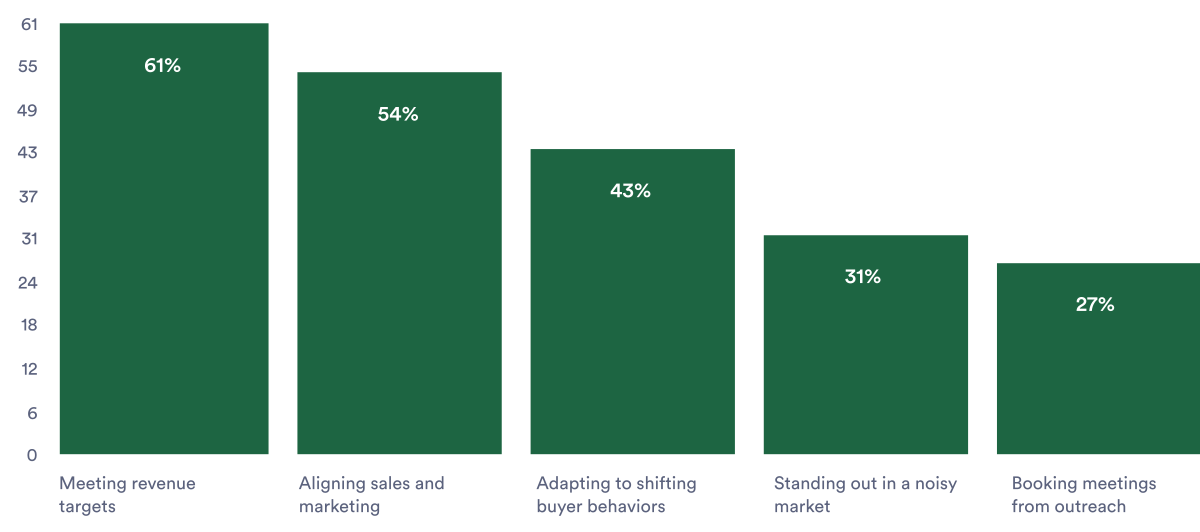
Video helps with all of these challenges.
Vidyard was able to reduce our OWN meeting no-show rate from 13% to just 9% since launching our Video Agent solution. That’s a rate ~67% lower than the industry average.
But the true value for revenue leaders and their teams lies at the intersection of video and agentic AI. Together, this powerful combination of technologies not only unlocks measurable revenue and productivity benefits—it also unlocks the ability to deliver meaningful, human-centered experiences to customers and prospects at scale.
Let’s explore.
Video is now table stakes
In a digital-first business environment, video is the most effective way to get face-to-face with prospects. A short message introducing oneself or reminding a client of an upcoming call helps foster the human connections buyers are craving and builds the foundation of trust revenue pros need to close deals further along in the customer journey.
Top 5 ways teams are using video today
-
64%
Brand awareness and demand generation
-
45%
Event/webinar follow-up
-
44%
Post-sale engagement
-
44%
Internal enablement
-
64%
Brand awareness and demand generation
And this isn’t aspirational. Across the board, teams who use video as part of their revenue strategy are seeing results where it counts: their bottom line.
Video is a proven play for prospects, pipeline, and conversions
Video isn’t just popular—it’s proven to drive real business results. 93% of revenue leaders using video say they’ve seen positive results, including positive impact on revenue.
Of revenue leaders who measure video-specific KPIs tied to revenue impact, 47% say they hit revenue targets more easily, 44% say they’ve improved conversion rates at key funnel stages, and 40% say they earn more responses from prospects.
That means revenue teams who leverage video are closing more deals, faster than ever.
More than a third (35%) report higher win rates, 28% say they have increased pipeline volume, and 27% cite shorter deal cycles or faster progression through the sales funnel. And respondents with a more holistic view of deal progression were even more likely to report some of these positive results—those in executive roles were 38% more likely to say they've seen faster deal progression.
But many revenue teams are still falling short when it comes to measuring success. That is to say, they are measuring video usage across the customer journey, but not necessarily revenue impact. And 22% admitted they don’t measure video performance at all.
This underscores a clear area of opportunity, as improving video measurement would help teams quickly understand what's working, and what’s not, ultimately strengthening their entire go-to-market motion.
Moreover, 81% of teams identified simpler measurement as a key driver of adoption. This suggests teams want to track progress, they just need solutions that enable them to do so easily.
What’s holding teams back from implementation?
Video is a key play to capturing attention in an increasingly crowded market. It’s visually engaging, authentically human, and unlike traditional text-based content, it helps revenue teams tap into powerful emotional and visual storytelling.
Still, as with any technology, there are leaders and laggers. In this case, 18% of revenue leaders surveyed said they still aren’t incorporating video into their outreach strategy.
When asked why, here’s what they had to say
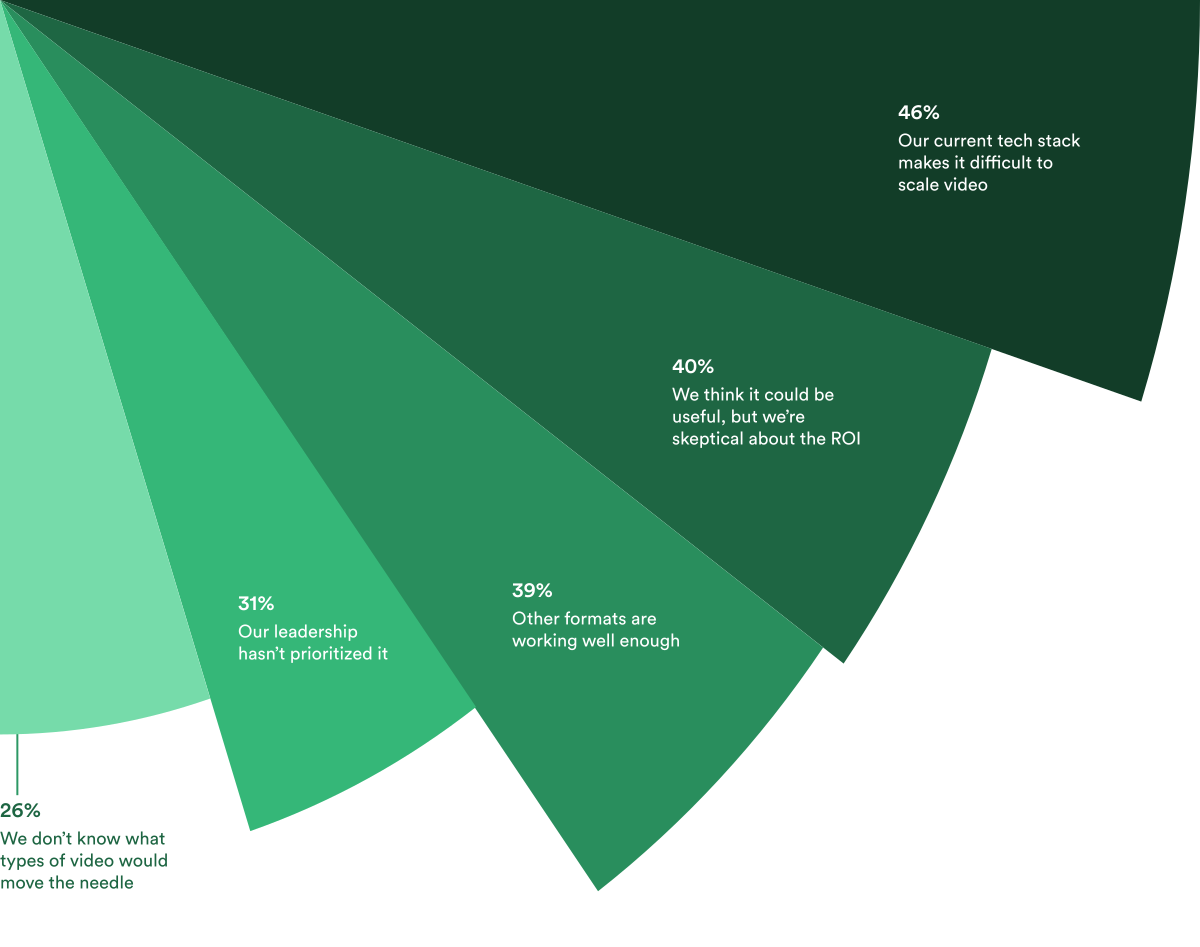
Sales vs. marketing
Our research revealed that while video serves the whole revenue team, sales and marketing leaders have vastly different relationships to it - especially when it comes to why they haven’t incorporated it into their overarching strategy. Here’s what we found:
| Marketing | Sales |
|---|---|
| 132% more likely than sales to say “We don’t know what types of video would actually move the needle” | 42% more likely than marketing to say “Our audience doesn’t respond well to video” |
| 100% more likely to say “We don’t have the internal skills or resources to create video” | |
| 36% more likely to say “It’s too expensive” | |
| 32% more likely to say “We’re not sure how to measure video effectiveness” | |
| 29% more likely to say “We don’t have the time or bandwidth to produce video content” |
In short, marketing leaders are more likely to feel unsure about what works or lack the tools and resources needed to execute. Sales teams, on the other hand, tend to question whether they’ll hurt their chances with high-stakes prospects.
Based on the data shared earlier in this report, we think it’s safe to say video has much more potential to help than hurt. The takeaway for teams who still haven’t jumped on the video bandwagon? A one-size-fits-all approach won’t cut it. Adoption depends on solving the right problem for each team.
Tech stack troubles
Indeed, when it comes to getting the most from video investments, 26% of team leaders say they haven’t fully optimized their process, and 64% say their teams believe in the value of video but struggle with implementation.
Some other notable findings here:
- 87% of revenue leaders agree that successful tech adoption depends on how well a platform integrates with their current stack
- 46% say their current stack makes it difficult to adopt video in a scalable way
This is unsurprising when you consider the many benefits of integrating business platforms such as your CRM, marketing automation, sales engagement, and video solutions. Not only do integrations remove friction from workflows, save valuable time, and significantly reduce manual work and time spent toggling between applications, they also unlock more complete and actionable data.
The same data that would empower teams to increase adoption, along with empowering them to personalize customer experiences, accelerate response times, and make better strategic decisions.
When asked which AI-powered platforms teams are currently using, and therefore which tools in the revenue tech stack would be most important to integrate with, here’s how leaders responded:
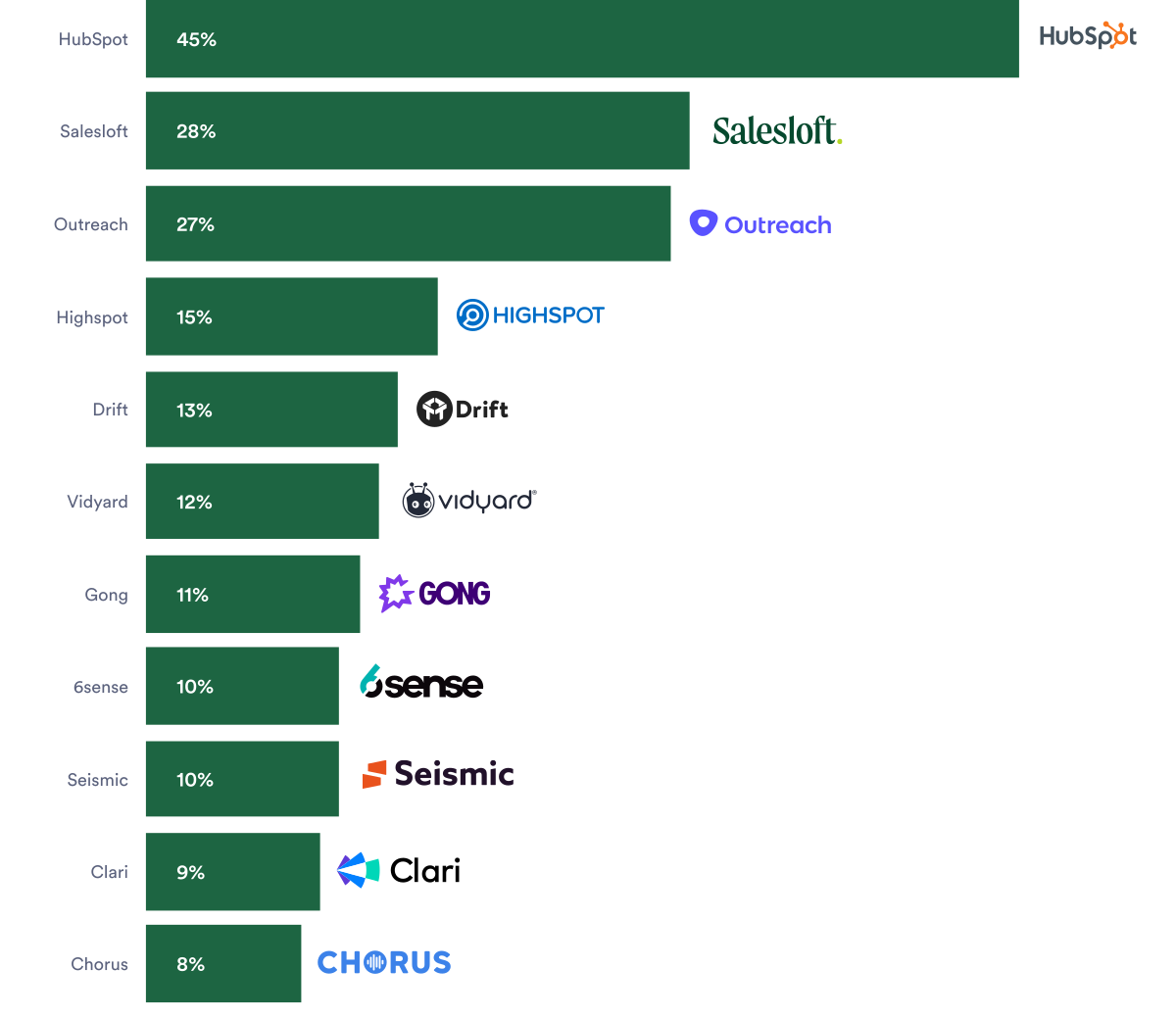
While HubSpot pulled away as a clear leader in the marketing stack, it is interesting to note how much more evenly distributed respondents were when identifying important sales tools. This fragmentation highlights an even greater need for a well-integrated tech stack where data flows smoothly, collaboration is streamlined, and teams can focus on high-impact activities.
Laggards beware: video is not a nice-to-have revenue tool in 2025. It’s a must-have.
With 80% of leaders saying video is a part of the team’s outreach, and 92% indicating it’s an essential part of their revenue strategy, it’s not hard to imagine how teams that don’t invest in video will leave revenue on the table and fall behind their competitors.
Currently, 53% of revenue leaders who aren’t using video say it’s “somewhat likely” they’ll add it to their revenue strategy within the next year, and another 13% said it’s very likely and/or are already in talks to incorporate.
Don’t miss the boat.

The power of agentic AI
Agentic AI is well on its way to going mainstream this year. And now that it’s entered the conversation, it’s already shepherding in the next wave of innovation to the revenue world.
What is agentic AI?
Agentic AI refers to autonomous systems that are able to carry out tasks with minimal human input. Agentic video solutions can automatically generate videos using a seller’s AI Avatar based on buyer intent signals, like downloading a whitepaper from a company’s website.
Agentic AI is the ideal way to automate, personalize, and accelerate revenue activities. 38% of revenue teams are already using agents as part of their revenue strategy, and 46% are actively exploring it.
Here’s how teams are using it today.
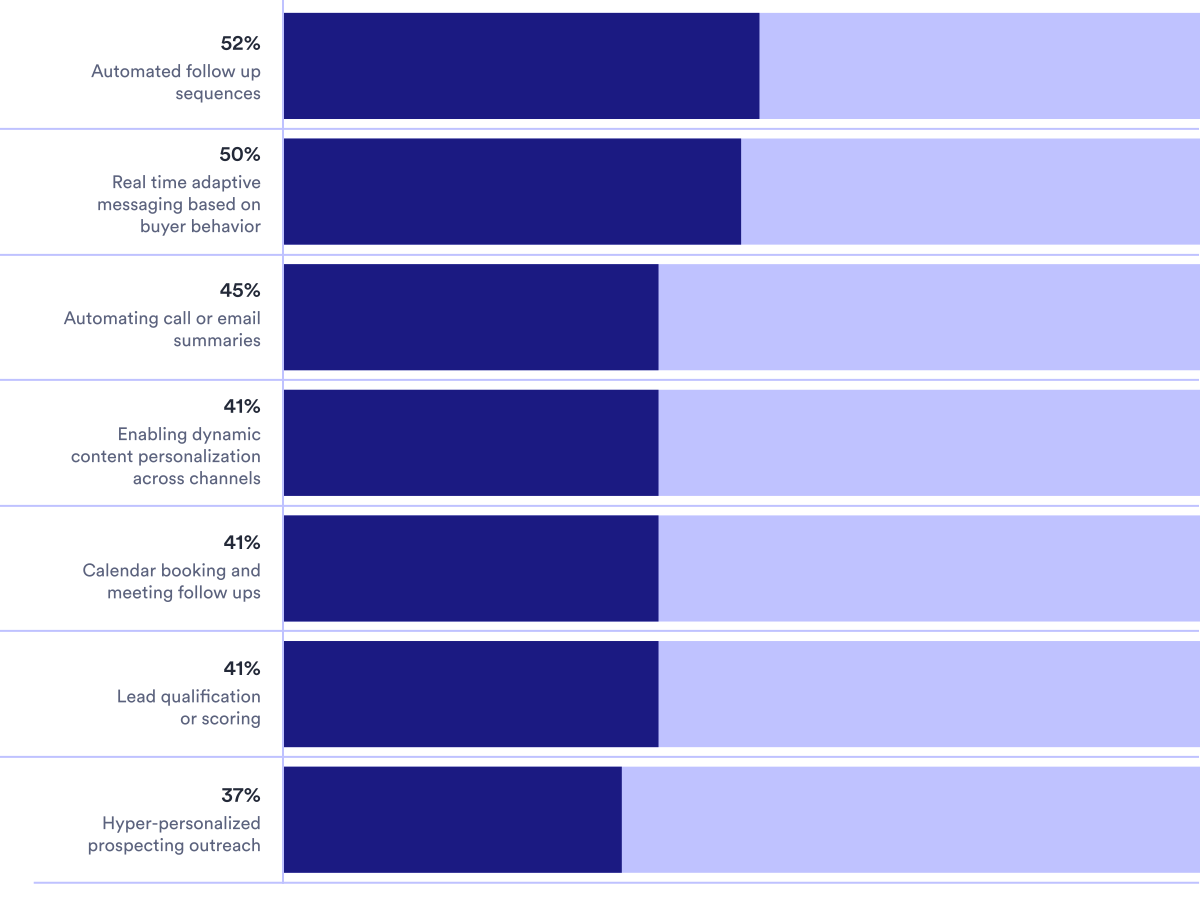
And these teams are reaping impressive results. 92% of revenue leaders who have made an investment in agentic AI said it has made a noticeable impact on their team’s performance, including:
-
50%
Achieving sales or marketing KPIs faster
-
45%
Increased win rates or closed deals
-
48%
Spending more time on strategic work and high-value interactions
-
42%
Operating at a higher level without adding headcount
-
48%
Improved engagement
-
35%
Accelerated deal cycles
These same leaders also told us their teams save an average of 16 hours per week across all tasks.
Video + AI boosts productivity and pipeline
Around two in five revenue teams have already fully implemented AI-powered video tools (39%).
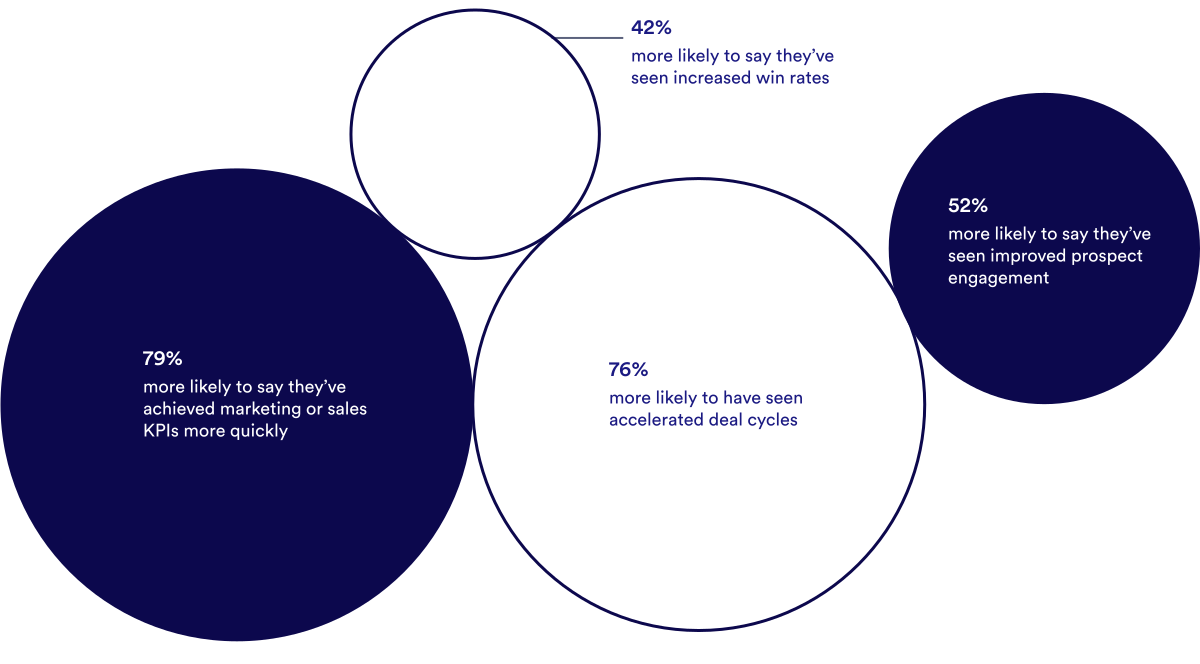
These respondents were 70% more likely to have optimized their video outreach processes and 206% more likely to track pipeline and revenue KPIs. The result? A cohort of leaders 100% more likely to report higher win rates. How is that? These teams use AI-powered video to scale personalized, human interactions efficiently across their entire revenue motion. This boosts engagement, builds buyer trust, and directly improves deal velocity and win rates—driving measurable revenue outcomes.
How revenue teams are using AI tools to augment video outreach:
- 62% use AI-assistant analytics to measure performance
- 54% use AI to write video scripts
- 49% track engagement for optimization efforts
- 46% automate video creation and delivery based on buyer behavior
- 36% use predictive lead scoring to prioritize who receives video
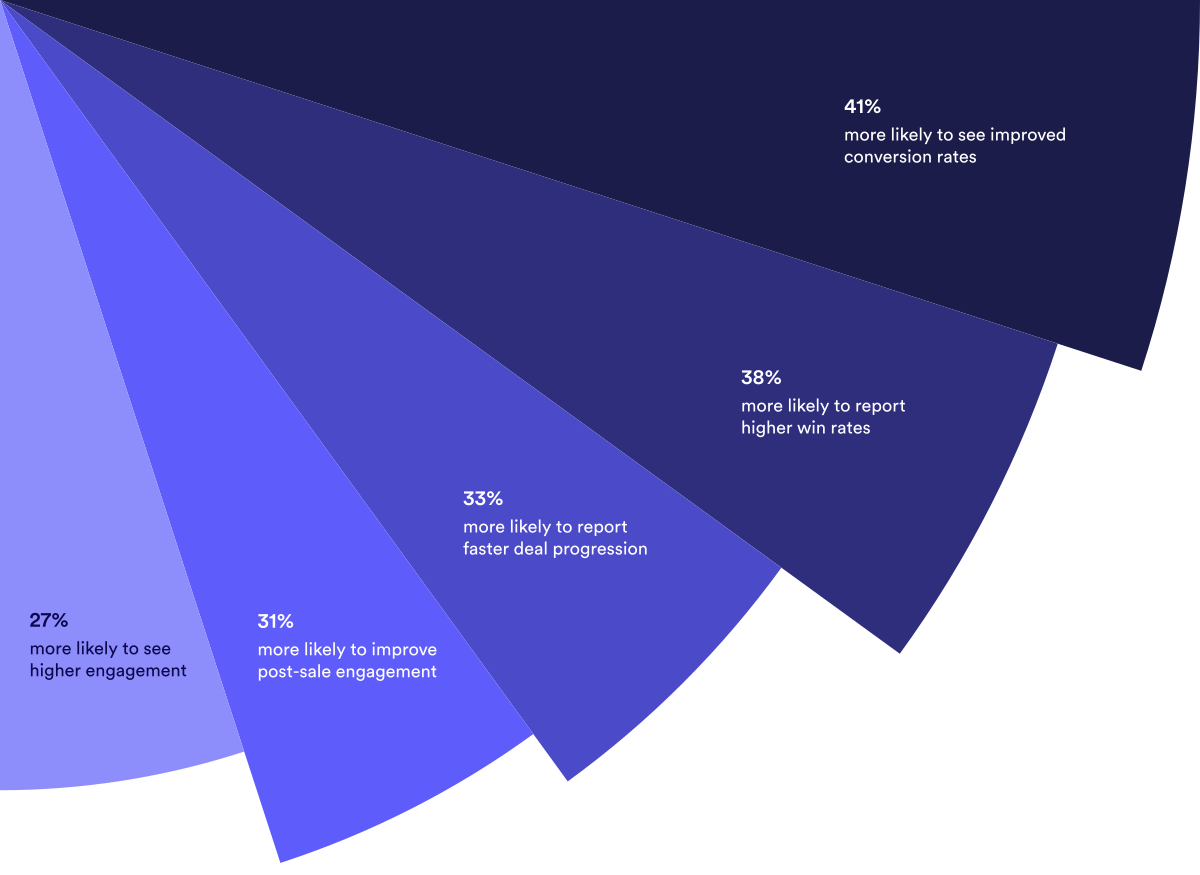
When teams combine video and AI agents, they drive bigger wins across the funnel. These users were:
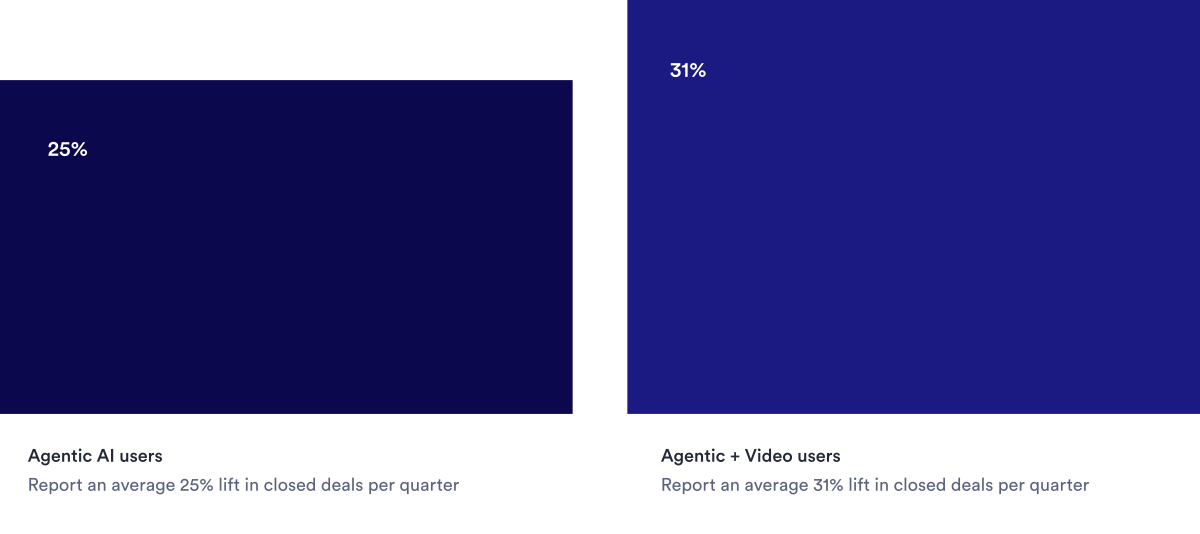
The productivity lift is undeniable. A whopping nine in ten (89%) revenue leaders using agentic technology say their team’s productivity has increased since implementation. And not a single respondent reported a productivity decrease.
This confirms that AI agents are key to unlocking efficiencies in an incredibly tough market.
Buyer trust in AI is growing—if done right
When asked how they are using AI and video together, almost half (42%) of revenue leaders say they’re only doing so experimentally. These leaders say AI needs clearer guardrails or more oversight (33%), and argue that they’re worried about losing human connection (27%).
That said, 74% of revenue leaders say their trust in AI has increased in the past 12 months. 62% of those who aren’t using agentic AI say they’re somewhat likely to adopt it in the next year, and 13% say adoption is already in motion.
To earn and keep that trust, organizations need to be transparent and ethical in their usage and prioritize keeping frontline revenue users in the loop.
Be transparent about how you use AI
To maintain trust, businesses need to be open and honest about their AI practices. 76% say that transparency around AI-assisted outreach improves buyer response, and 76% also predict that standardized transparency practices will exist within a year.
Avoid overuse and misuse
AI works great when it’s implemented thoughtfully. But when overused or misused, it can degrade buyer trust:
- Nearly half (49%) of revenue leaders worry that oversaturation of agentic-AI driven communication could lead to fatigue.
- 59% worry about misuse harming brand reputation.
What is agentic AI?
Agentic AI refers to autonomous systems that are able to carry out tasks with minimal human input. Agentic video solutions can automatically generate videos using a seller’s AI Avatar based on buyer intent signals, like downloading a whitepaper from a company’s website.
Keep your people involved
The good news is, AI isn’t replacing your sellers and marketers. It’s elevating them. Keeping a human in the loop is critical to success with agentic AI, especially when it comes to a format like video, where authenticity is the goal.
- 88% say some level of human oversight is essential to maintaining authenticity.
- 88% say that as buyers, they’ll favor vendors who invest in trust guardrails.
Agentic AI is reshaping jobs and introducing opportunities for professional development. 38% say they’ve already reallocated money from areas like headcount to invest in agentic tools, and 35% say they’re considering doing so.
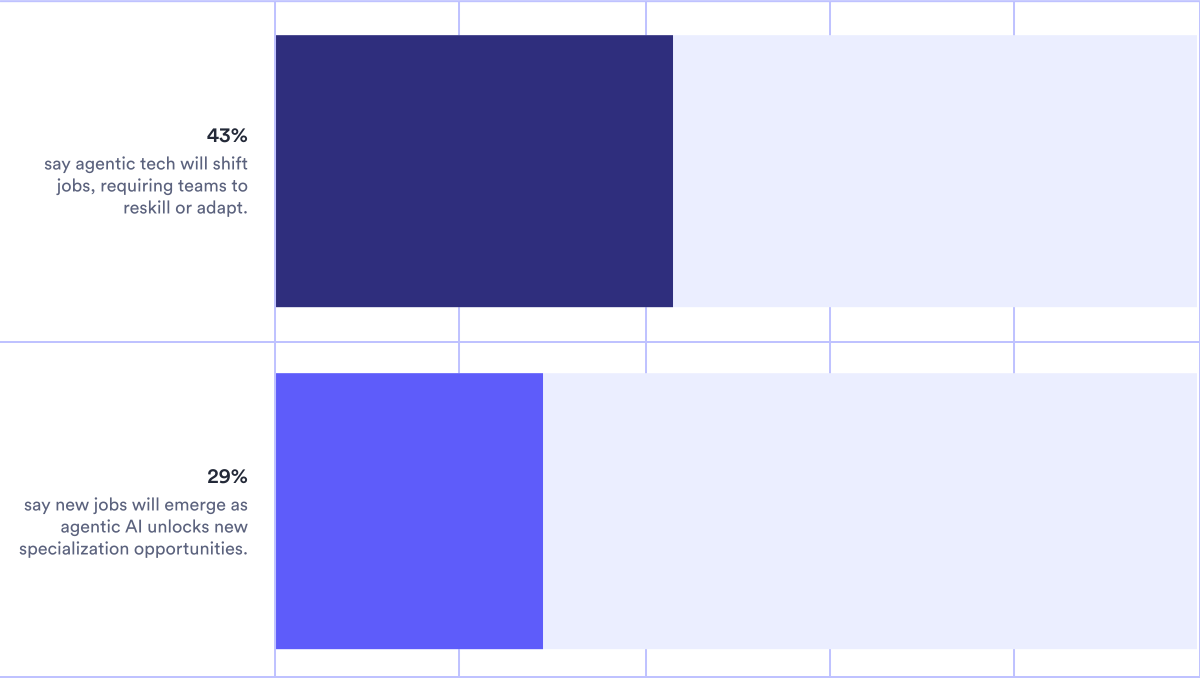
Here’s how these changes may impact teams day-to-day:
- 43% say agentic tech will shift jobs, requiring teams to reskill or adapt.
- 29% say new jobs will emerge as agentic AI unlocks new specialization opportunities.
Conclusion
By pairing the human elements of video with the productivity gains and precision of AI agents, revenue leaders can improve pipeline, boost their bottom line, and free up time to focus on what really matters: building stronger relationships with customers.
Join the AI-powered video revolution with Vidyard
Vidyard is the leading provider of AI-powered video messaging, video hosting, sales prospecting, and buyer engagement solutions for go-to-market teams. Our customers see even bigger wins with their video efforts because our platform is purpose-built for revenue teams to connect with customers and close more deals.


See why the best sellers use video