
 Video Messages
Record personal videos to reach more customers.
 Video Agent New
Automatically send personalized videos with agentic AI.
 Vidyard Hosting
Manage all your business videos in one central spot.
 Vidyard AI Avatars
Generate personalized AI videos at scale.
 Vidyard HubsSee All Features →
Curate and share your best videos in one branded page
 Prospecting and Intros
Stand out and improve response rates.
 Sales
SalesGenerate more pipeline and close more deals.
 Post-Sales
Keep customers engaged after the deal closes.
MarketingHost video content and convert viewers into leads.
 Converting and Closing
Connect with buyers and close more deals.
 Corporate Comms
Create and deliver an internal communications strategy.
See Vidyard in Action →
“Personalized Vidyard video messages drove an 8x improvement in click-through rates and a 4x improvement in reply rates.” Read More
 Blog
BlogThe secrets to virtual selling and video best practices.
Video Agent HubCase studies and how-to videos for every revenue use case.
 Help Center
How-to and help articles for all things Vidyard.
 Fast Forward
Expert advice on all things virtual selling.
 Use Cases
Explore real ways to use video across your business.
AI Resource HubGuides and ideas for using AI in your workflow.
 Case Studies
Learn how our customers win more with Vidyard.
 Live Workshop Series
Showing you exactly how to put video to work.


The Inbound Problem Nobody Talks About: You’re Generating Leads You’re Not Converting
Jun 16, 2026
·
8 min read

Stuti Dutt
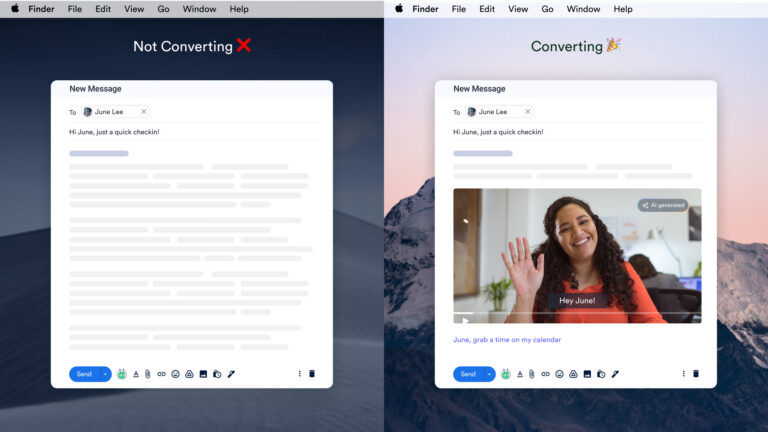
The inbound funnel is working. What happens after a prospect raises their hand is where pipeline quietly slips away.
Your marketing is working. Prospects are finding you, clicking your ads, filling out your forms, attending your webinars. Inbound interest is there.
And then most of it quietly disappears.
The product was right. The prospect was ready. The problem was everything that happened between their form submission and a real conversation, a gap that is longer, colder, and more impersonal than it needs to be.
The issue is what happens after a prospect raises their hand. Interest stalls in the handoff, too slow, too generic, and too easy for a prospect to ignore.
This is the inbound conversion problem. And it’s more expensive than most marketing teams realize.
The gap between interest and conversation
The average B2B lead response time is 42 hours. Nearly two full business days after a prospect raises their hand. By then, the window has already closed. 78% of B2B buyers purchase from the vendor that responds first, and the chance of qualifying a lead drops by 80% after the first five minutes.
That means the window to capture inbound intent isn’t hours. It’s minutes. And most teams are missing it entirely.
Speed matters, but it’s only half the problem. A fast, impersonal response can be just as forgettable as a slow one. What converts at the moment of peak intent is a response that feels like it came from an actual person.
Why inbound conversion breaks down
Most marketing teams are excellent at generating demand. Most sales teams are skilled at closing deals.
The breakdown happens in between.
The handoff from interest to conversation relies on systems, timing, and communication quality that most teams haven’t optimized. And the result is a pattern that repeats across almost every inbound funnel:
- A prospect fills out a form and receives a generic autoresponder
- A prospect attends a webinar and gets the same follow-up email as everyone else
- A high-intent lead sits in a queue while a rep manually works through their outreach list
- A content download triggers a nurture sequence that could have been written for anyone
Most teams optimize for lead volume. The teams that win optimize for what happens in the minutes after intent is created.
Piling on more follow-up emails doesn’t close the gap, it just adds to the noise. What moves the needle is what happens at four specific moments, the ones where a prospect is still paying attention and deciding whether to go further.
And the format that consistently makes the difference? Video. 50% more of buyers respond to messages that include at least one video in the cadence. It puts a human face in the inbox at the exact moment a prospect is deciding who to engage with.
Four moments. One conversion system.
Individually, these are useful tactics. Together, they form a repeatable system for converting intent into pipeline. Some moments require immediate automated response. Others work best when they feel personal. The highest-performing teams design for both.
| Moment | What happens | Type | Outcome |
| Form submitted | Instant personalized video follow-up | Automated | Capture intent at peak, higher reply rates |
| Content downloaded | Relevant video walkthrough + intro | Automated | Warmer leads, faster qualification |
| Event / webinar invite | Personal video invite from presenter | Manual or AI Avatar | Higher registration + attendance |
| Post-webinar | Segmented follow-up by engagement | Automated + Manual | Pipeline from event investment |
The first two moments are built for speed and scale. The last two benefit most from a human face, because the prospect has already spent time with your brand and a personal response deepens that relationship rather than starting from scratch.
1. Inbound lead: instant video follow-up
The moment a prospect submits a form, their intent is at its peak. They’ve taken an action. They want something. And they’re deciding, in real time, whether your response is worth their attention.
What breaks today: An automated confirmation email fires. It confirms receipt. It promises someone will be in touch. It’s forgettable. By the time a rep manually follows up, hours or days have passed and the prospect has moved on to other tabs, other vendors, other priorities.
What high-performing teams do differently:
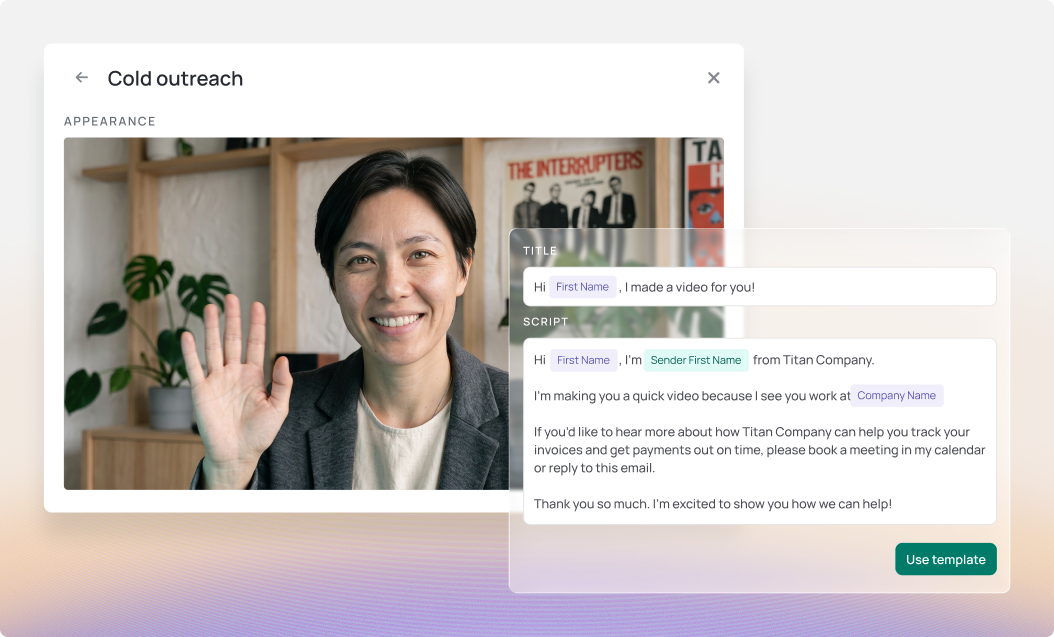
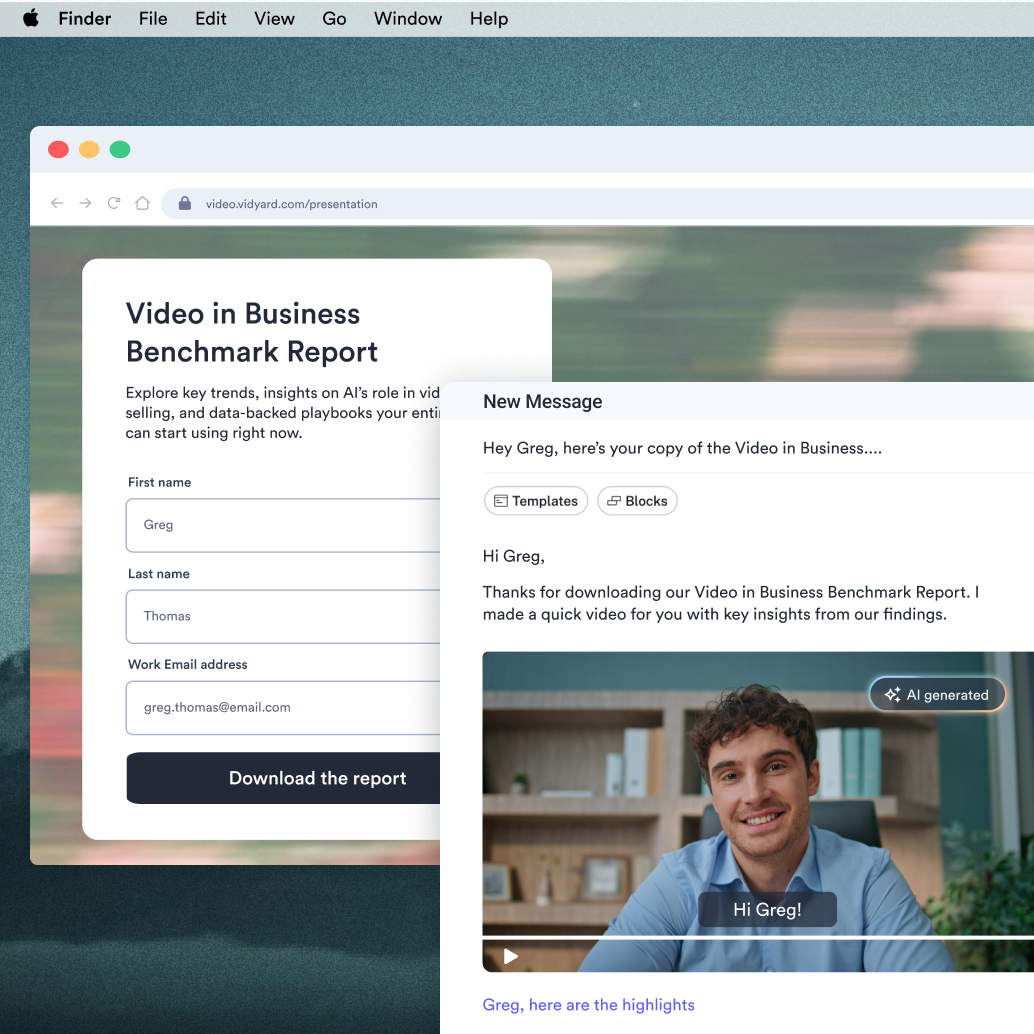
- Automated personalized video (AI Avatar, triggered): The moment a lead submits a form, a video fires automatically introducing the assigned rep by face and name, acknowledging what the prospect expressed interest in, and giving them an immediate reason to engage. No rep action required.
- CRM or MAP-triggered workflow: The video connects directly to your existing stack, HubSpot, Salesforce, Salesloft, firing within seconds of submission. The prospect meets the rep before a competitor has even opened their CRM.
- Direct CTA embedded in the video: Every automated video includes a clear next step, a booking link, a demo request, or a reply prompt, so the prospect can act immediately while intent is still warm.
Where to begin: Start by mapping your highest-intent form submissions, demo requests, pricing page inquiries, free trial signups, and build one automated video workflow for each. Record your AI Avatar once, connect it to your CRM trigger, and the system runs across every lead from that point forward. One setup. Every lead gets a personal-feeling response in seconds.
Outcome: Faster first contact, higher reply rates, more qualified conversations booked.
Proof: When Vidyard used Video Agent to follow up with prospects who visited the booking page but didn’t schedule, 1 in 4 converted to MQL, with no rep involvement. The same approach dropped Vidyard’s own no-show rate by 33%, taking it from 13% to 9%. The pattern holds because the response arrives while intent is still warm, a personalized face on screen in minutes, not a generic confirmation email hours later.
2. Form fill: intro and expectation-setting video
Not every form fill is a demo request. Some prospects are downloading content, exploring the product, or researching before they’re ready to talk. These leads are still in play. They’re researching, comparing, and forming an opinion about your brand whether you’re actively nurturing them or not. What you send in that window shapes whether a rep eventually gets a warm conversation or a cold one.
What breaks today: A content download triggers a nurture sequence. The prospect gets a series of emails that could have been written for anyone, generic, product-focused, untethered from what they actually downloaded or why. The sequence runs its course. The lead goes cold.
What high-performing teams do differently:
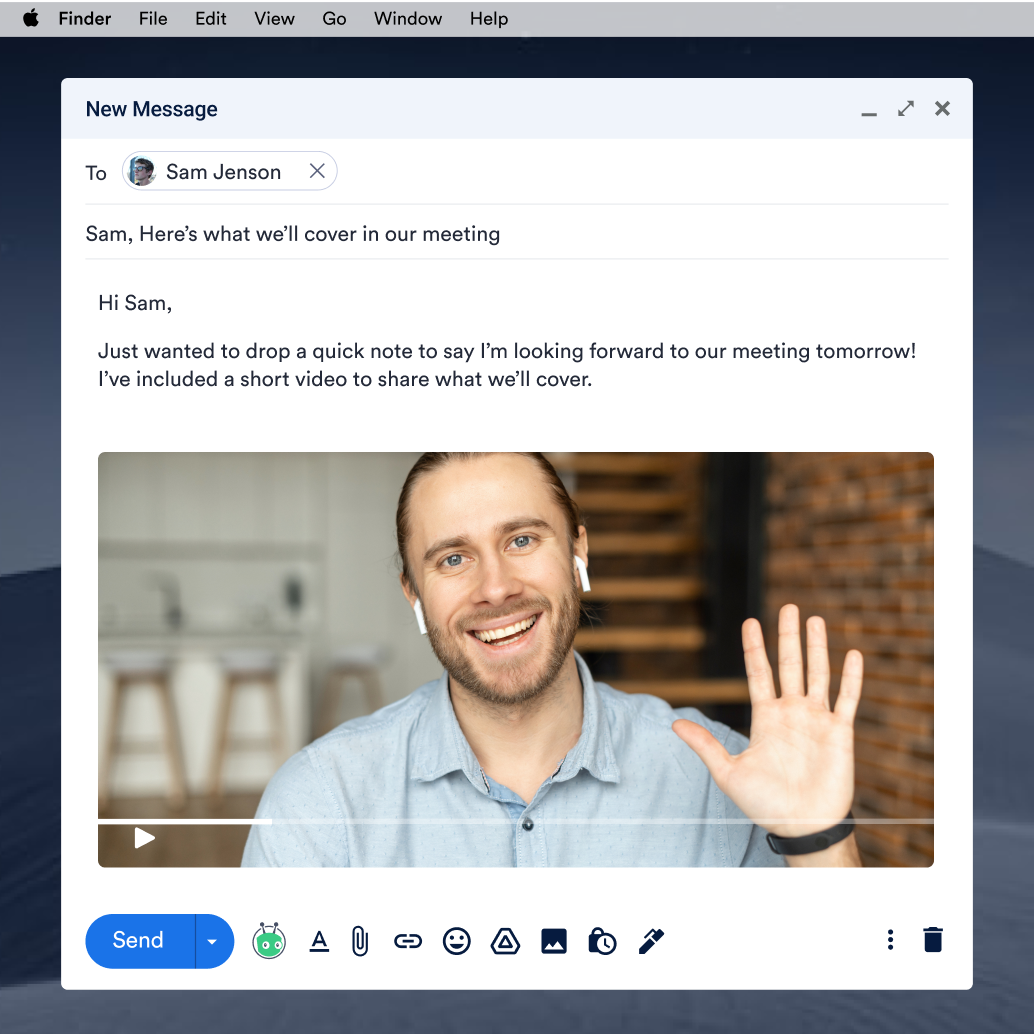
- Content-matched intro video (recorded Message or AI Avatar): A prospect who downloads a report on sales efficiency gets a short video walking through the one insight most relevant to their role. A prospect who visits a pricing page gets a video from a rep explaining what the right package looks like for a company their size. The follow-up meets them where they already are, building on what they just engaged with rather than a pivot to what you want to sell them.
- Screen-share walkthrough (recorded Message): Instead of sending a plain link to a whitepaper or report, record a 90-second screen-share walking through the key finding. The content gets the engagement it deserves and the prospect gets context before they’ve even opened it.
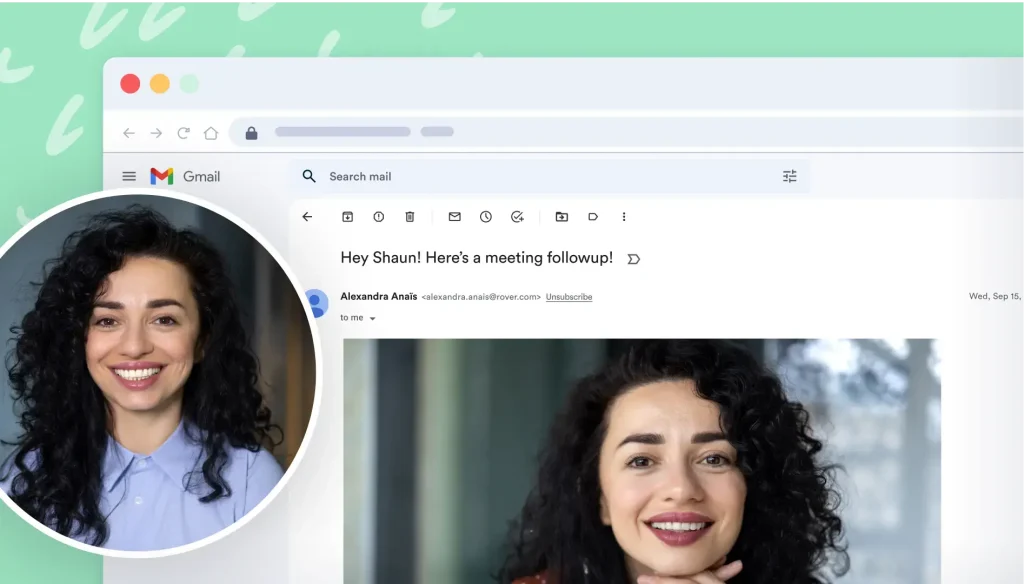
- Rep intro video (recorded Message or AI Avatar): A short face-to-camera intro from the assigned rep in the first-touch email puts a name and face to the brand before any call happens. First conversations land warmer as a result.
Where to begin: Pick your top three content assets and record a 90-second video for each one: here’s what this covers, here’s the one thing worth paying attention to, and here’s why it matters to you. Pair it with the download confirmation. The prospect gets value immediately and a face to associate with your brand before a rep ever reaches out.
Outcome: Higher content engagement, stronger lead qualification, warmer handoffs to sales.
Proof: Video in a lead nurture sequence drives 3.4x higher click-through rates than text-only emails. The difference isn’t novelty. It’s that a face-to-camera video from an actual rep makes the follow-up feel like a conversation rather than an automation. Leads who engage that way arrive at their first sales conversation already knowing who they’re talking to.
3. Event and webinar invites: drive registration and attendance
high-engagement webinar can be substantial. But most of that value depends on getting the right people in the room, and most event invitations don’t do enough to earn that attendance.
What breaks today: An event invite goes out. It’s a calendar hold, a subject line, and a logo. It asks a prospect to commit an hour of their time with no context on why this particular event is worth it, no human connection to the people they’d be hearing from, and no personalisation beyond their first name in the greeting.
What high-performing teams do differently:
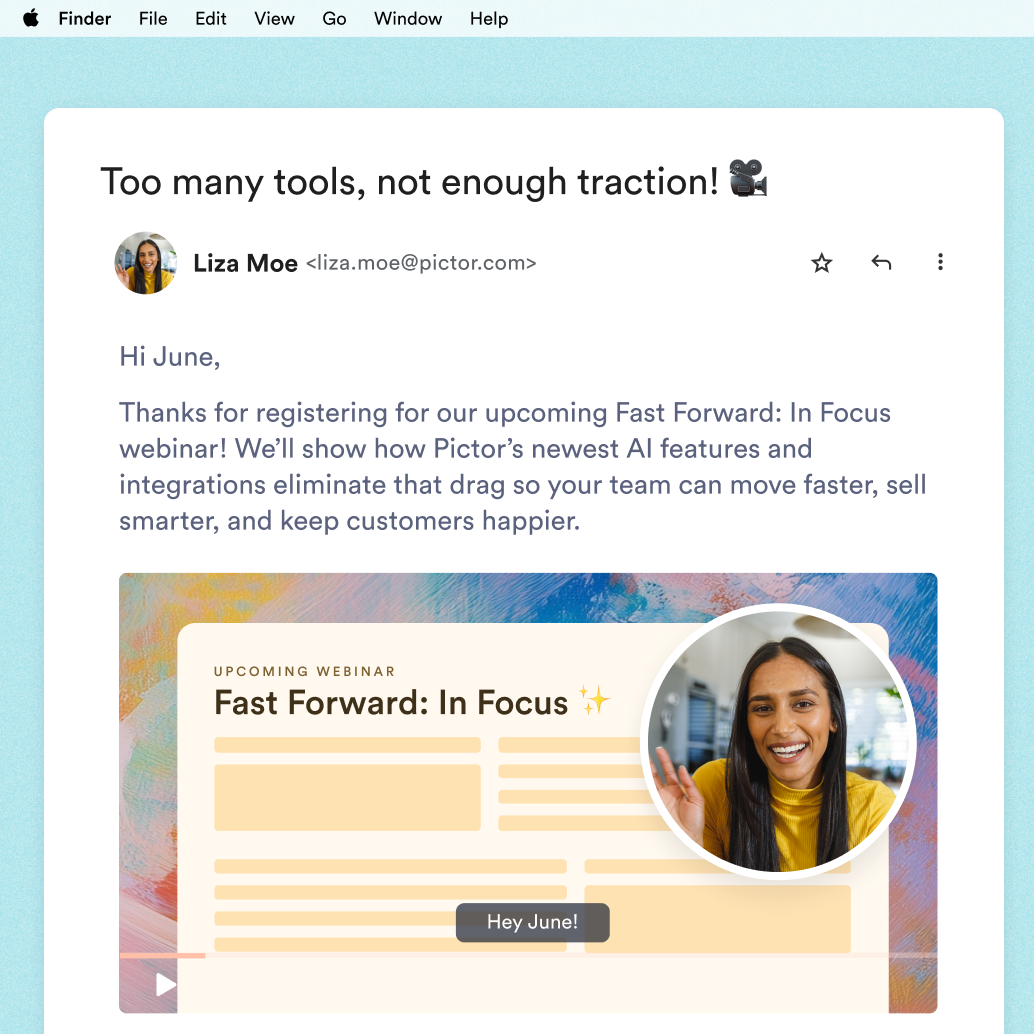
- Presenter teaser video (recorded Message or AI Avatar): A 60-second video from the speaker giving a genuine sneak peek of one insight from the session. The goal isn’t a polished promo, it’s a genuine, direct message from the presenter that gives prospects one specific reason to show up.
- Personal video invite from a rep (recorded Message): Sent to target accounts or high-value prospects, this video references their specific situation and explains why this event is relevant to them. Feels like a personal recommendation, not a blast email.
- Pre-event reminder video (recorded Message or AI Avatar): Sent the day before or the morning of, from the same familiar face. Keeps the event top of mind in a way that a calendar notification never can and reduces no-shows before they happen.
Where to begin: For your next webinar, have the presenter record a 60-second teaser video delivering one genuine insight from the session directly to camera. Use it as the primary invite instead of a plain calendar link. Track registration rates against your baseline. That one change is enough to see whether video moves the needle before you build out the full sequence.
Outcome: Higher registration rates, stronger attendance, more engaged participants.
Proof: Teams using Video Agent for personalized pre-event reminders hit a ~50% webinar attendance rate, well above the 30-40% industry baseline. A short video from the presenter, sent the day before, does something a calendar notification can’t, it gives the prospect a reason to show up that’s specific to them. Attendance goes up because the event stops feeling like a commitment on their calendar and starts feeling like a conversation they’re already part of.
4. Post-webinar nurture: convert engagement into pipeline
A webinar ends. The attendees log off. And then, for most teams, the follow-up is the same for everyone: a “thanks for attending” email, a recording link, maybe a follow-up sequence that runs for a few weeks before going quiet.
This is where the majority of webinar pipeline value is left on the table.
What breaks today: Every attendee gets the same follow-up regardless of how engaged they were. Someone who watched 80% of the session and asked three questions gets the same email as someone who joined for five minutes and dropped off. The follow-up doesn’t reflect what they actually experienced and it certainly doesn’t feel personal.
What high-performing teams do differently:
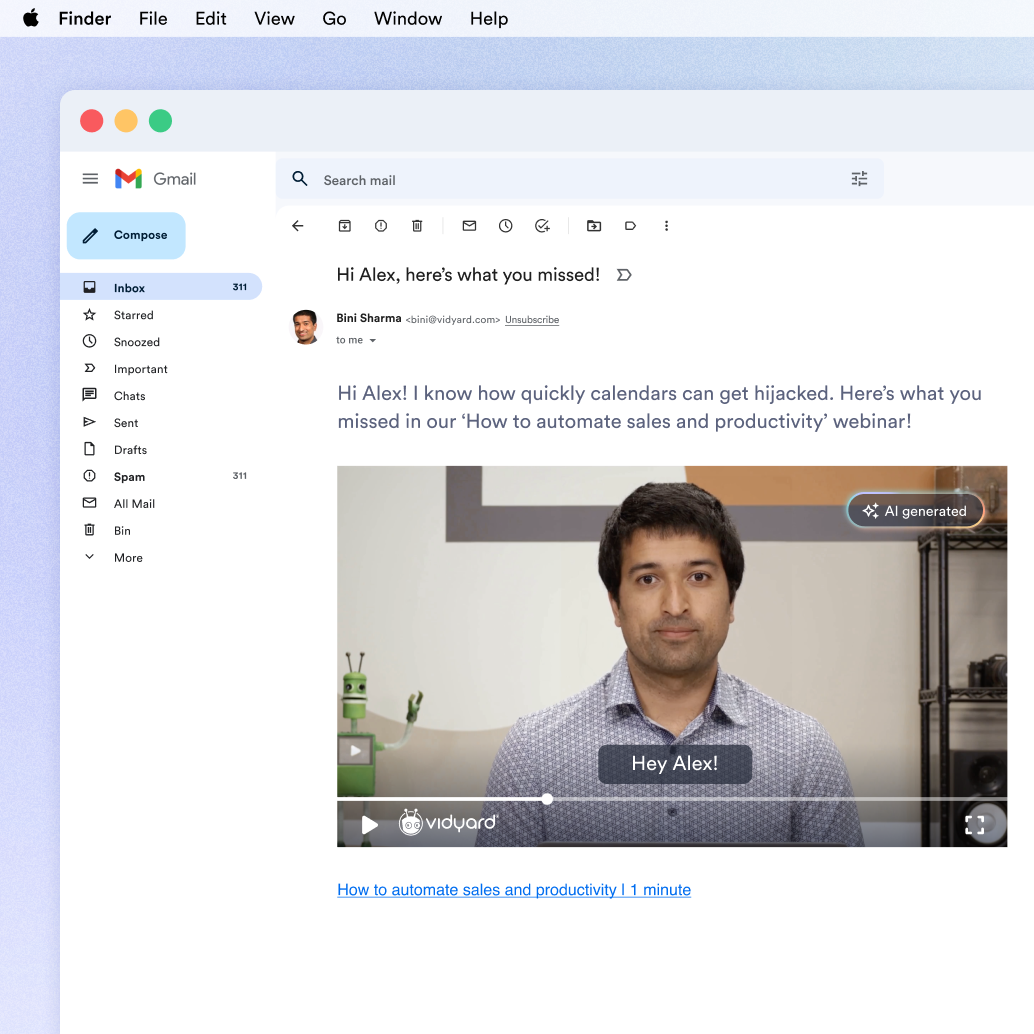
- Personal thank-you video for live attendees (recorded Message from presenter or rep): Sent within hours of the event ending while the content is still fresh. From the same familiar face they saw on the webinar. References something specific from the session so it feels like a continuation, not a template.
- Re-engagement video for no-shows (AI Avatar or recorded Message): A short “you missed it” video with the recording link and one specific reason to watch. Triggered automatically based on attendance data, no manual effort required.
- On-demand follow-up for recording viewers (AI Avatar, triggered): When someone watches the recording days or weeks later, a follow-up video fires automatically. That re-engagement is a buying signal worth acting on, and the video captures it while intent is warm.
- CRM-synced lead scoring: 75% watch time on your webinar recording automatically updates the prospect’s CRM record. Reps follow up with context rather than guesswork, knowing exactly who engaged and how deeply.
A note on signal: Video engagement adds a layer of intelligence most teams miss entirely. Who watched, how long, and what sections they cared about turns passive attendance into actionable intent. That data lives in your CRM and shapes every follow-up conversation.
Where to begin: Start with three triggered sequences based on attendance: a personal thank-you for live attendees, a “you missed it” re-engagement for no-shows, and a follow-up for anyone who watches the recording later. Each one is short, personal, and triggered by behaviour, not by a calendar. Build those three and the post-webinar pipeline starts working on its own.
Outcome: Higher post-event conversion rates, stronger pipeline from event investment, more qualified sales conversations.
Proof: Prospects who attended a video event are 2x more likely to reply to follow-up outreach than those who received standard follow-up. That’s not just a channel effect, it’s a relationship effect. A prospect who already saw your face during the webinar and then receives a follow-up from that same face isn’t starting from scratch.
The bigger picture
Most inbound optimization conversations focus on the top: better copy, stronger CTAs, higher-converting landing pages. Those conversations matter. But some of the highest-impact improvements happen downstream, in the moments between a prospect showing interest and a rep having a real conversation.
The gap is predictable, but the fix is easy to scale. And the teams that close it don’t just generate more pipeline from the same inbound volume. They make every marketing dollar work harder by ensuring the leads it generates actually become conversations.
Inbound interest is already there. The difference is whether your follow-up is fast enough, and human enough, to turn it into a conversation.
Want to see how automated and personal video fit into your inbound workflow? See it in action.