
 Prospecting and Intros
Stand out and improve response rates.
 Sales
SalesGenerate more pipeline and close more deals.
 Sales Support
Set your sales team up for success.
 Marketing
Host video content and convert viewers into leads.
 Converting and Closing
Connect with buyers and close more deals.
 Corporate Comms
Create and deliver an internal communications strategy.
See Vidyard in Action →
“Personalized Vidyard video messages drove an 8x improvement in click-through rates and a 4x improvement in reply rates.” Read More
 Blog
BlogThe secrets to virtual selling and video best practices.
 Video Agent Hub
Case studies and how-to videos for every revenue use case.
 Knowledge Base
How-to and help articles for all things Vidyard.
 Fast Forward
Expert advice on all things virtual selling.
 Templates
Free sales templates for every stage of the deal cycle.
 FAQ
FAQGet the answers to your top Vidyard questions.
 AI Resource Hub
Guides and ideas for using AI in your workflow.
 Case Studies
Learn how our customers win more with Vidyard.







The Ultimate Guide to Virtual Selling in 2025
Jul 11, 2025
·
9 min read

Lori Connor

Discover how to take your virtual selling processes and practices to the next level including key components, top tools to use, and how video is helping teams stand out.
Virtual selling is here to stay. Get our in-depth guide to the top tips and tools for closing more remote sales deals with video.
Whether you call it “ virtual selling,” “remote selling,” or “trying to close sales through a computer screen,” you already know that the world has shifted from seeing online selling as a novelty to a necessity.
Today, it’s how companies want to buy: with only 15–25% of B2B buyers want to ever interact with reps in person to make a purchase decision.
With this shift, customers’ expectations have also shifted — especially with the rise of AI-powered tools and the ubiquitous nature of virtual selling today.
As such, you must adapt your approach, skillset, and tools for long-term virtual selling success. Whether you’ve barely dipped a toe into remote selling or taken the full dive, this guide will cover all the virtual selling tips you need to know.
Why is virtual selling important, and how does virtual sales work?
Virtual selling is exactly what it says on the tin: selling products and services predominantly through online channels, without the need for in-person handshakes and wet ink signatures.
These days, your customers want to buy online…even for those big-ticket business purchases. The modern b2b buyer is over halfway (57%) through their decision-making process before ever contacting a vendor. This means they’ve done their research, created a shortlist, and believe your product could be a good fit — all via online channels like your website, social media, and downloadable sales enablement material.
With the advancement of artificial intelligence, virtual selling is now shifting from people-powered research to AI-powered research, so ensuring your online presence is accurate, updated, and available is more important than ever.
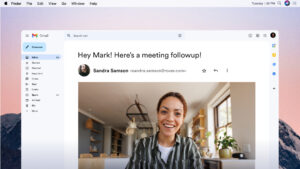
Record once to create your free AI avatar, then generate on-demand videos that bring personalization to scale.
What’s an Example of Virtual Selling?
So what does the virtual selling process actually look like in the age of AI?
- Sales prospecting. When you’re selling virtually, you’re reaching out to your prospects virtually, too. Today, we’re seeing the rise of AI prospecting agents, automating personalized emails, phone calls, LinkedIn messages, or even more advanced (and more effective) virtual selling techniques like prospecting videos.
- Booking and running sales meetings. Technology has made it easier than ever to schedule and run effective sales meetings including AI agents to help craft an agenda, transcribe the meeting, and extract insights to follow-up on.
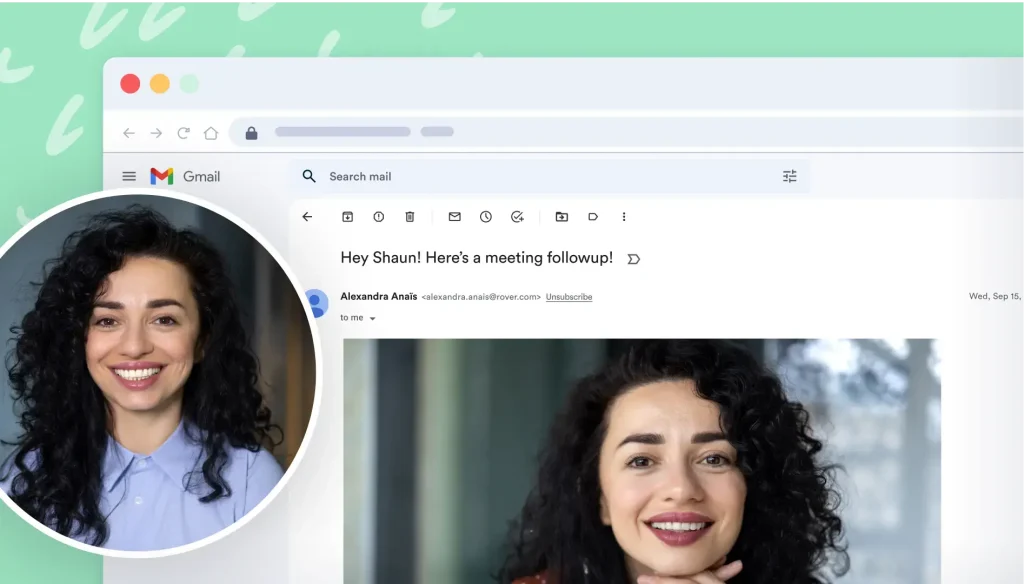
- Meeting follow-ups. Whether you send a follow-up email or share a personalized video message recapping the key points and next steps, this is a key part of the virtual selling process.
- Keeping the deal moving. It can be easier for a deal to languish if you aren’t getting face time with your buyers. Tools like digital sales rooms can help keep buyers plugged in all the way to the finish line.
- Proposals. Creating and sharing proposals online is easier than ever, with customizable software that can alert you when a buyer has viewed and signed!
- Hand-offs. When it’s time for the deal to move to another team member, you will make the introduction via email or, better yet, a personalized video featuring both team members.
The evolution of virtual sales
The pandemic accelerated the rise of virtual selling, but the real evolution has come over the last two years with the major advancements in AI in sales including automations, AI-enhancements, and big data processing to help extract more accurate insights.
Unless you’ve been living under a rock, you’ve likely seen AI features added to your existing tools to make prospecting easier, follow-ups faster, and personalization scalable to enhance remote selling strategies.
Virtual selling is here to stay, but how we do it is changing fast, especially with AI sales agents taking over and replacing many of the manual and repetitive sales tasks reps hate. If you haven’t already, we recommend exploring the new features within your existing sales tools to see what you might be missing.
Key components of a winning virtual sales strategy
In 2025, we’re pretty far down the path of selling online — meaning you likely already have engaged in some sort of virtual sales. This new world should accelerate sales cycles, enable you to reach more prospects, and adapt faster to buyer preferences. If your team isn’t feeling the positive effects of this shift and you’re still feeling like you need to fly out and shake hands to make deals happen, your virtual sales strategy might be off.
But don’t worry – we’re here to help you craft a winning strategy with our three part approach to help you get more juice from the squeeze.
- Why you need to design a virtual selling sales process
- Seven virtual selling techniques you should be adopting
- Some of the best virtual selling tools you should be using
Let’s dive in!
Part 1: Redesign your sales process for virtual selling
Virtual selling isn’t just about contacting buyers solely through emails and social media. It requires a full reinvention of your process to overhaul how you communicate, follow up, and sell, with the potential to never meet the buyer in person.
Are you working with an optimized playbook focused on selling virtually? To really succeed with virtual selling, you need to reimagine your b2b sales process — here’s how:
- Set clear goals & KPIs: Define measurable business outcomes (conversion rates, sales velocity, average deal size) that are aligned with broader business goals.
- Audit current sales process: Map existing virtual sales processes and workflows to identify bottlenecks and inefficiencies for buyers. Look at both quantitative data (win/loss rates, deal sources, etc) and qualitative data including feedback from satisfied customers, sales reps, and managers.
- Enhance virtual engagement strategies: Make improvements based on suggestions and learnings including ensuring your team has high-quality sales enablement material, are fully trained up, and that they have all the sales tools they need to succeed.
- Integrate AI & automation tools: Your team could be saving a ton of time while managers could have far more accurate data by investing in high-quality virtual sales tools to automate repetitive tasks like CRM data entry or ensuring a prospect is followed up with. Identify easy opportunities to integrate new technology, run a small trial, and then get everyone on board!
- Codify the sales process: Create standardized sales stages with defined actions and criteria to proceed. Clearly documented sales playbooks, scripts, best practices, and handoff points between marketing, SDRs, AEs, and customer success helps ensure everyone is on the same page.
- Train and align revenue teams: Bring teams together to not only create but adopt the new sales processes, tools, and tactics. Develop sales coaching practices and ongoing training and support for all teams through workshops and roleplaying scenarios to create an environment of learning from one another.
- Test, launch, and iterate: Pilot new processes with small teams, gather feedback, and monitor results. Once you feel confident, get the entire team on board – but don’t just set it and forget it! Make sure teams feel comfortable providing feedback on how to make incremental improvements.
How are you selling virtually right now? How do you want to be selling in the future? What changes will your virtual selling team make (or you will have to make to your virtual selling team) to reach your desired outcome?
Make those decisions about your long-term virtual sales process and start putting them into practice!
Part 2: 7 essential techniques for virtual sales success
1. Get the virtual selling basics down
When you’re selling virtually, ensuring you’ve done your homework is more important than ever. You’ve only got a limited amount of time with your prospect—the length of a Zoom call—and every moment you spend together counts.
With the loss of a lot of in-person interaction surrounding sales meetings, you must ensure your message is solid and your value is clearly demonstrated. Here’s how to stand out before, during, and after every digital interaction.
- Top performers come prepared. Do your research. Know your buyer, their business, their values, and their pain points. Be organized; have all your materials ready to go at minute 0 of the call. Be ready to present supporting materials like reports and customer stories during the call to strengthen your business case.
- Anticipate the questions they’ll ask. Every question is an opportunity to educate the buyer. Every objection is a chance to show your product’s value (and to look like you know your stuff). Anticipate them and be ready to answer.
- Listen actively. Pay attention to the words your buyer uses, the way they say them, and the way the conversation flows. It can tap you into how the buyer’s feeling. It’s especially important when you can’t be in the same room together—you need all the info you can get.
- Don’t waste their time. Your buyers probably have another call right after this one. Know how long your conversation will run, stay on target, present useful information and resources at every turn, and generally respect your buyers’ time.
Pro tip: You can use Vidyard to send personalized video messages as follow-ups to recap the conversation, answer their questions, and document clear next steps which can be shared with the entire buying committee.
2. Explore new ways to prospect
Sales prospecting while remote presents a whole new range of challenges. What’s the best way to break into prospects’ inboxes? How do you carve out a slice of their busy video call calendar? How can you be more than just another random name in an email’s “From” field?
The secret to successful virtual prospecting is to make an impression fast. You need to:
- Identify the right places to connect with prospects
- Reach out to the prospect in a personal, memorable, and engaging way
- Demonstrate your product’s value ASAP
While it’s easier than ever to send a cold email, actually getting a reply is harder: only 8.5% of cold emails receive a response. One thing we know is working? Video.
Hubspot reports that eps who use videos in their email outreach see up to 5x higher open rates and 8x higher open-to-reply rates.
Here at Vidyard, we make it easier than ever for sales teams to get started and scale personalized video outreach including our latest launch of Video Agents and AI Avatars.
We also offer our free Chrome Extension that let’s teams create video scripts using AI, record personalized video messages, and get basic analytics into how your video resonated with your prospects.
3. Make buyers feel comfortable
Making a sale without ever meeting the buyer in person can be intimidating. But the more comfortable you are with virtual selling, the more comfortable potential customers will be with virtual buying.
Buyers will feed off your energy. Practice, review, and settle in so that you can project confidence in the process at every stage of the sales cycle.
- Help buyers understand the virtual sales process. Outline what they can expect at each stage of the process so they have a tangible roadmap to follow. It’ll help them feel more at ease with putting down the cash for a big purchase.
- Educate your buyers. It proves your expertise and builds trust—two things that are critical when buyers are only seeing you through a screen. You can’t count on good old in-person charisma; you have to prove your (and your product’s) value the hard way.
- Respect buyer burn-out. Chart out where you need to speak in real time and where you can afford to communicate at a slower speed. Not everything has to be a video call.
- Build a genuine human relationship. When your presence is just text on a screen, it’s hard for buyers to relate, connect emotionally, and get invested in your product. Find ways to show buyers your face and fill in the gaps left by the inability to meet up in person. Be genuine, authentic, and real. Nobody likes dealing with someone who’s fake and insincere, especially when that person is trying to sell them something.
4. Make sales calls interesting
Unfun fact: 48 hours after a virtual sales call, buyers only retain 10% of what you talked about. This means that you have to identify the most important tenth of your message and be sure it gets through to your buyer.
Here are a few ways to make sure your message sticks.
- Get buyers engaged. It’s hard to keep buyers’ attention during virtual meetings. Engagement = memorability, so make the presentation interactive with questions and other engaging elements, turning a one-way presentation into a collaborative exercise that gets buyers invested.
- Get visual. Show, don’t tell! Pictures, diagrams, and live or recorded demos give buyers something to focus on rather than just words on a screen. So they’ll stay engaged—and the better you’ll be able to cement that key 10% of your message in their minds.
- Share presentation materials ahead of time. Buyers can check it out in advance of the call to familiarize themselves with the material. During the call, they can follow along on their end to stay focused on key talking points. It’s also a great fallback measure if you run into tech issues on your call.
- Be a mediator. Keep the call on task. When you’re selling virtually, you can’t direct the conversation with your body language and non-verbal cues. Plus, you’ve only got a fixed-length meeting slot with your buyers. Know when (and how) to steer the conversation back to the issue at hand.
And use video throughout the process – because viewers retain 95% of a message when they watch it in video. From initial outreach to follow-ups to ensure your messaging and the next steps are clear, using video is a top way to stand out.
5. Multiply sales touch points to maintain engagement
Object impermanence is real and it’s hard to make buyers remember that you exist.
That’s why amping up your sales process’s touch points is the way to go by engaging in a variety of remote selling strategies. Connecting with buyers using emails, texts, voicemails, video messages, and “thought you might find this useful” content are a great way to keep the engagement going beyond the bounds of your virtual sales call.
6. Track the right sales metrics
When you’re selling, information is crucial. But reading in-person body language isn’t an option when selling virtually.
Which virtual selling strategies are working? Which aren’t? You can find the answers by tracking the right metrics.
The best sales metrics to keep tabs on are ones like:
- How long is your sales cycle?
- How many opportunities close?
- How close are you to hitting your quota?
- How much revenue is each new customer bringing in?
When you integrate sales metrics into your sales automation or CRM system, you can turn individual data points into trackable trends. They shed light on how buyers are interacting with you, what strategies you should be doubling down on, and which ones are worth cutting loose.
7. Align with the rest of the business
Selling doesn’t exist in a vacuum. Aligning your sales and marketing teams can unclog your pipeline and get things flowing smoothly.
A lot of your promotional materials come from marketing, right? And how often have buyers come to you after reviewing marketing materials loaded with expectations that aren’t quite accurate to how the product actually behaves?
You’re not exactly bumping shoulders with the marketing team in the office anymore. It’s important to set aside time to make sure you’re on the same page.
By collaborating closely with marketing, you can:
- Make sure both sides of the house are aligned when it comes to buyer-facing (and sales-supporting) materials.
- Refine your lead generation and handoff strategy to suit how prospects purchase.
- Create a unified revenue team that has a direct stake in the marketing, selling, and customer success process.
Part 3: Top tools your virtual sales team needs
You can tune up your virtual sales process all you want, but you’re not going to get far without the right tools.
AI-powered tools for virtual sales
When you’re selling virtually, using the right tools can give you a serious boost to both your productivity and your sanity. Here are a few tools that have been making major waves with sellers:
1. Sales outreach and enablement
Your team needs tools that make it easy to send personalized outreach at scale while helping them stay on top of every prospect.
While your CRM helps keep track of company and contact data, tools like Gong, Outreach, and Salesloft enable teams to drive revenue with purpose-built AI features including automated data capture, AI-generated personalized emails, and in-depth analytics for sales leaders to ensure teams are staying on track.
2. Meeting scheduling
Every prospect prefers scheduling meetings slightly differently. Tools like Calendly or features found in the sales engagement platforms above make it easy for prospects to select a meeting time that works best for them.
However, sometimes folks are turned off by these, especially more senior executives. So if you have a meeting scheduling tool, make sure you share a few times in the email that work, so they can either reply or have their assistants reply.
3. Sales call recording and analysis
Gone are the days of manually trying to write down the most important parts of a sales call. With sales transcription and analysis technologies, meetings are automatically recorded, transcribed, and summarized. Tools like Dialpad, Gong, and Clari all offer the basics, with some going above and beyond with sentiment analysis and follow-up suggestions.
4. Sales coaching
In virtual selling environments, teams aren’t getting nearly as much fact time with managers – meaning that sales training and coaching haven’t been prioritized. However, now that we’re deep into distributed teams and working from home, we’ve seen a rise in AI-powered sales coaching tools.
The big players in sales engagement technology like Gong, Outreach, and Clari all offer sales coaching capabilities. But if you’re looking for a standalone solution, Saleslify and Hyperbound are two new players going all in on helping virtual sellers succeed.
5. Video tools
Video is the virtual seller’s secret weapon — and the data backs us up here. Over one-third of sales professionals who use personalized videos report that it has shortened their sales cycle, and nearly half report that it has increased close rates.
Vidyard has helped over 100,000 teams around the world break through the noise, engage more prospects, and close deals faster with AI-powered personalized video messages. With our AI Avatars, teams can create personalized videos without needing to write scripts or record, making video selling accessible to all!
Check out the full list of our favorite free sales tools or a list of our favorite AI sales agents.
Virtual selling with video
Video is the best replacement we’ve got for being there in person. You can’t shake their hand through a computer screen, but you can snag their attention with a quick, thoughtful, well-produced video. It’s your best tool for establishing those crucial personal connections quickly.
Using synchronous video for sales
Synchronous (or “sync”) video communication happens when both parties are on the call at the same time. It’s great for interactions where the conversations flow, like sales calls.
Sync video tools include:
- Zoom
- Microsoft Teams
- Google Meet
- FaceTime
Using Asynchronous Video Messages for Sales
An Asynchronous (or “async”) video is recorded and sent like a voicemail. It’s ideal for lighter touchpoints in your sales process, like prospecting, call follow-up and check-ins.
You can sprinkle video all across your sales process, like pepper on pasta. (Except it’s much easier to go overboard with the pepper than with the video.)
With our latest features, teams can automate creating and sending videos after they take certain actions like requesting a demo or downloading a whitepaper with our Video Sales Agents powered by our AI Avatar technology.
Over half of sales pros who use video say it’s helped reduce the need for lengthy emails and chat messages.
Which style of video is better?
Sync and async video fill different niches in your remote sales toolkit.
Synchronous video is great for those down-and-dirty sales calls where you need to hash out the details with your buyer.
However, booking those video meetings can be a drain on your (and your buyer’s) calendars. Ever heard of Zoom fatigue?
That’s the beauty of asynchronous video. Just create, send, and let it sit. The recipient can watch the message on their own time while still getting all the personal connection benefits of seeing and hearing you right there on the screen.
Plus, with certain asynchronous video tools, you can track when your buyers watch your videos to make sure you’re following up at the right time.
7 tips for virtual selling with video
- Make sure your whole team is up to speed with your video selling standards, whether you’re using sync or async video.
- Invest in a good-quality web or external camera, sound, and lighting setup to make your videos look professional.
- Check your camera angle, background, and backlighting.
- Dress well to give yourself some extra on-camera confidence. (Yes, that means pants.)
- Minimize distractions—turn off notifications and remove kids/pets from the room.
- When recording, make eye contact with the camera to create the effect of speaking right to the viewer.
- Master your tools, so you know how to conquer issues that can come up during a video session.
Better yet – our AI Avatars simplify the entire video creation process by creating personalized videos without needing to write scripts, record, or edit! With AI Avatars, you can generate and send personalized video messages to customers even when you’re not in front of the camera.
“Not everyone is a natural on camera at first, but there are some simple steps you can take to feel more confident with the medium. If you’re just starting out with video, try recording a practice video to send to friends and family (or even colleagues!) for some honest feedback about how you come across.”

Lucy Allen
Challenge Marketing Managing Director
Want to dive deeper into video for virtual selling? Here are some great resources:
- Video Sales Prospecting 101
- Free Video Selling Templates
- Tips for Getting Comfortable on Video
- The State of Virtual Selling Report
Mastering virtual sales: next steps
Every seller benefits from sales enablement. Even if the foundation of your virtual selling skills is solid, virtual sales is a changing discipline. It’s important to stay on top of best practices to make sure you aren’t falling behind.
Here are a free resource to build your virtual sales skills:
Selling remotely presents a whole new realm of opportunity. Your opportunities are no longer limited to just the buyers you can meet for a meal and a sales presentation. The world really has become your sales oyster.
Start transforming your virtual sales strategy with Vidyard’s AI-powered video tools to take your team to the next level. Get in touch with our team to take our tech for a test drive today.
Updated on July 11, 2025.