
 Prospecting and Intros
Stand out and improve response rates.
 Sales
SalesGenerate more pipeline and close more deals.
 Sales Support
Set your sales team up for success.
 Marketing
Host video content and convert viewers into leads.
 Converting and Closing
Connect with buyers and close more deals.
 Corporate Comms
Create and deliver an internal communications strategy.
See Vidyard in Action →
“Personalized Vidyard video messages drove an 8x improvement in click-through rates and a 4x improvement in reply rates.” Read More
 Blog
BlogThe secrets to virtual selling and video best practices.
 Video Agent Hub
Case studies and how-to videos for every revenue use case.
 Knowledge Base
How-to and help articles for all things Vidyard.
 Fast Forward
Expert advice on all things virtual selling.
 Templates
Free sales templates for every stage of the deal cycle.
 FAQ
FAQGet the answers to your top Vidyard questions.
 AI Resource Hub
Guides and ideas for using AI in your workflow.
 Case Studies
Learn how our customers win more with Vidyard.





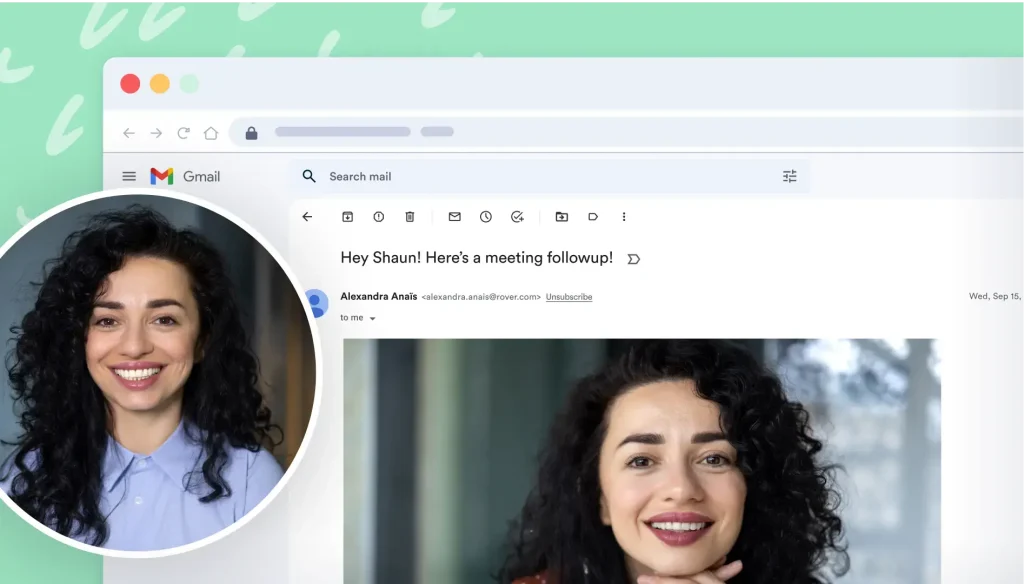

How To Write the Best Sales Emails: A Foolproof 4-Step Method, Plus Examples for Every Phase of the Sales Process
Dec 5, 2023
·
17 min read

Carina Rampelt
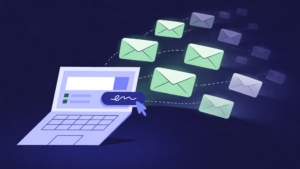
Writing sales emails that prospects actually want to read is an art and a science. This tried-and-tested sales email writing strategy gets more clicks, responses, and meetings booked (we would know).
Remember that scene in Harry Potter where Harry’s Hogwarts letters are pouring through the mail slot, the chimney, and every crack and crevice in the Dursley home? That’s not a bad metaphor for what your prospects go through every day. The average office worker now receives upwards of 120 emails per day (to say nothing of Slack) so getting their attention on your sales emails can feel like an impossible challenge.

But as email volume cranks up, quality is going down—meaning that you have a unique opportunity to stand out with thoughtful outreach that actually inspires curiosity and interest from your buyers. In this article, we’ll share a four-step method for writing sales emails that you can adapt for any situation, expert advice on personalizing your messages, and example templates for every phase of the sales process. Plus, we’ll teach you how to use AI to assist your sales email writing the right way.
(Psst, we recommend bookmarking this page and revisiting it anytime you get stuck or need some sales email inspo—we’ve got you covered.)
Table of Contents
What is a Sales Email?
Sales emails refer to messages sent throughout the sales process that help move a prospect from awareness to interest to consideration, and ultimately, making a purchase decision. Salespeople use different types at different phases of the sales process, including cold outreach, follow-ups, reminders, post-sale messages, and upsell or cross-sell emails.
Email remains one of the most popular channels for sales outreach and for good reason. Pretty much everyone has an email account, and you don’t need them to follow you on a social media platform to reach them. Because they’re so widespread, however, sales emails, especially prospecting emails, have become a bit tired as a format. Prospects know all the tropes and won’t fall for gimmicky messages. So how do you ensure your sales emails raise the bar—not objections?
It all comes down to mastering the art of writing a great sales email, which we’ll cover in the next section.
How to Write a Great Sales Email in 4 Easy Steps (With Examples!)
A great sales email template can be broken down into four key parts. Tackle each part in order and you have an endlessly reworkable formula you can use to nail any sales email you need to write. Let’s break it down.

1. Write an Intriguing Subject Line
Your sales email subject line is your first impression—and the point at which someone decides whether to open your message or send it straight to the trash (they have 119 other ones to get to, after all). So it’s critical to pique their interest.
We’ve already written extensively about what goes into crafting a great sales email subject line, but here are a few key pointers:
- Make it personal: Include your prospect’s first name or other personal detail so it feels immediately relevant to them.
- Don’t give away all the good stuff: Tease what’s inside, but don’t say it explicitly—building suspense to get your prospect to click.
- Keep it casual: Use lowercase so it fits in among the correspondence they usually get.
- Stay short: Depending on how your prospect is receiving your email, they’ll probably only see the first 30-40 characters of your subject line. Make sure to include all the important info before the 40-character mark to make sure it doesn’t get cut off.
Examples of great sales email subject lines:
- [Name], I saw one of your ads…
- 3 tiny changes you can make today to start the new year right
- [Name], I have to tell you…
- How [similar but non-competitive company] cracked $4M in sales
- 5 things you need to know about hiring your first five engineers
- How to think faster, talk smarter, and shine when the pressure is on

Learn how to craft the best email subject lines, including writing tips and an inspiring list of 40+ examples.
2. Craft a Compelling Opener
Getting your prospect to click is just the first step. Now that you have their attention, what are you going to do to make hearing you out worth their while?
Your first sentence or two has to do a lot of heavy lifting: Build a connection with your prospect, establish what you’re doing in their inbox, and keep them interested enough to keep reading. If that sounds like a lot to accomplish in a short amount of space, don’t worry—we have plenty of examples you can use as inspo.
If this is a cold email or a prospecting message, it’s important to tell the prospect who you are and why you’re getting in touch so they’re not confused. That said, don’t waste too much time with lengthy intros. A quick, “Hi [Name], I’m ___, from X company,” should be plenty. (And if it’s a warm email or a follow-up, you don’t need to worry about including this part.)
A great opener should do the following:
- Give relevant context: Who are you and what are you doing in my inbox?
- Build authentic connection: Break the ice with a genuine compliment or shared interest (we’ll share more on how to effectively do this in the section on personalization below).
- Put the focus on your prospect: What’s in it for them? Why should they care about what you have to say?
Examples of great openers:
- “I love the work you’re doing at [company]. It’s great to see a [relevant descriptor] business succeed. It’s clear you know what you’re doing, but everyone could use a little more support when it comes to [problem your product solves]…”
- “Huge congratulations on your promotion! What an exciting step. I’m sure you’re thinking a lot about the impact you’re going to make in this new role, and I have some ideas I’d love to share…”
- “I saw your recent LinkedIn post on [topic] and I was really intrigued by your perspective. It reminds me of the work we’re doing with [relevant but not competitive company] where we [did X action to achieve Y result]…”
- I noticed you…
- Congratulations on…
- I love the work you’re doing at…
- Loved what you had to say about…
- [Mutual connection] mentioned…
3. Compose a Short but Substantive Body (Better Yet, Record a Video)
This is where you deliver the goods (aka the value you’ve been setting up in your subject line and opener). In order to get what you want from your prospect—their time, and eventually their hard-earned dollars—you have to give something too.
Use a few clear sentences to lay out the value of your product or service offering. Or better yet, record a short video. It feels more personal, can allow you to communicate more information quickly and clearly, and is much more engaging. After all, if someone took time out of their day to record a video just for you, wouldn’t you want to see what they had to say? (Psst, for ideas on sales video formats you can steal, check out our pre-written sales video scripts and our extensive sales video template library.)
Whether you opt for text or video format, your email body should accomplish the following:
- Provide immediate value: What’s one immediately helpful idea or resource they can start using today? Give them a taste and leave them wanting more.
- Show receipts: What proof do you have that your solution works? Reference customer case studies and stats to make a more compelling case for your buyer.
- Make good on the promise you set up in the subject line: For instance, if you title your message “Reply Rates, CTR, and Axolotls,” this is where you need to deliver the axolotls. (This is key—if you set up an intriguing teaser but don’t follow through, you break your prospect’s trust, making them much more unlikely to engage with any of your future outreach).
Examples of great sales email body copy (that can double as video scripts):
- My team put together this comprehensive guide, which I thought you might find illuminating as you begin to build out your team. Please let me know if you have any questions—I’d love to discuss your specific goals and how we could support you.
- We recently worked with [similar but non-competitive client] to revamp their advertising funnels, leading to a 30% increase in free trial sign-ups and ultimately an additional $72K in revenue. I’d love to share more about our approach and how we could help you reach your goals this quarter.
- A little-known fact about the axolotl is that it can actually regenerate its limbs. What does this have to do with your marketing automation platform? Allow me to explain…
4. Close with a Clear Call to Action
You’ve captured your prospect’s interest and curiosity, now it’s time to ask for what you want. Close with a clear path to action so your prospect knows the next steps.
Tips for writing a great sales email CTA:
- Make the ask small and the value high: Ask for 10 or 15 minutes, rather than a half hour or full hour. Ensure the prospect knows the value they’ll get out of it.
- Keep it short and simple: Use short sentences and clear language for your CTA so it’s easy for the prospect to digest. Aim for a maximum of 1-2 sentences.
- Minimize effort: Embed suggested times directly in the body of your email using Gmail or your scheduling tool of choice—that way, prospects can schedule a meeting in a single click.
Examples of great closing CTAs:
- If you want to get [pain point] off your plate, I’d love to work with you. Would you be open to a short call this week?
- I’d love to spend some time discussing these ideas with you. Do you have 15 minutes this week to talk?
- I know you know what you’re doing, but sometimes a pair of outside eyes can provide some fresh perspective. I’d love to have a quick call to understand your current challenges and see if we could help.
- I’d love to grab some time next week to discuss how we can help you hit your goals. Does that sound like a good plan to you?
How to Craft a Personalized Email for Sales
With sales emails—particularly cold emails—you’re doing a lot of legwork to make a connection with someone quickly. It’s no wonder that folks sometimes fall back on tenuous icebreakers about schools their prospects attended or friends of friends of friends they have in common. But unless you have a meaningful shared connection with someone, it’s best not to shoehorn one in (it risks coming off as fake).
Instead, try a genuine compliment—it rarely goes amiss, and you don’t need to know the person personally for it to work. You just need to have put in a little bit of time to become familiar with what they do and have something positive to say. And it doesn’t have to be super complicated—don’t feel like you need to dig into every blog post they’ve ever written or podcast they were ever on. A quick scroll of their LinkedIn should give you plenty to work with. Have they written any recent posts, gotten promoted, or shared good news about their team?
If all else fails, you can fall back on, “I love the work you’re doing.” (Psst…if you get stuck, revisit some of the strong opener examples we shared above.)
Different Types of Outbound Emails (With Templates)
While you can adapt the formula we laid out above to any kind of sales email, messages at different stages of the sales process all have their own considerations to think about. Let’s review the main types you need to know.
Cold Email
- What is it?: Any email sent to a sales lead who you have never connected with before.
- When to use it: At the very beginning of the sales process. At this point, the prospect doesn’t know who you are and you need to break the ice (hence the term, “cold email”).
- Goal: “Warm” your prospect up and get them interested in talking with you further.
- Best practices: Make sure your email answers these four key questions: Who are you? Why are you reaching out? Why should the prospect trust you? Why should they care?
Subject line: [Name], I saw this on your LinkedIn profile…
Hi [Prospect’s name],
I’m [your name], from [your company]. I happened across your LinkedIn profile and wanted to share this short video I made for you: [add video]
[Relevant but non-competitive customer] is using our solution with impactful results and I wanted to share their story with you [add a link to a video or written testimonial/case study].
Would you be open to [time request] to chat further about how [your solution] could help your team? [link to calendar app]
Warmly,
[Your name]
BASHO Email
- What is it?: A specific subcategory of the cold email—usually sent directly to decision-makers and meant to be attention-grabbing. (More on this type of sales email here).
- When to use it: For targeting high-value accounts who don’t know you yet, as part of an ABM campaign or other targeted outreach. This type of email takes more time and effort to write, so it’s important to be selective with who you send it to.
- Goal: Get the attention of a key decision-maker.
- Best practices: Go more research-intensive than you would with a normal cold email so you can hyper-personalize your content. If your prospect has been on a podcast or written any blog posts, this is a great place to start.
Subject line: [Name], [specific question about their work]
Hi [Name],
I’m [your name], from [your company]. I saw your recent [LinkedIn post / blog post / podcast episode] and wanted to ask you [specifically tailored question to their interests]?
I’m reaching out because if you’re anything like the other [their industry] companies I work with, you’re dealing with [common pain point]. I recorded a short video for you to share some thoughts you might find helpful: [add video]
I’m sure you’re already thinking about this, but everyone could use a little extra support in [problem your product solves]. I’d love to discuss how [your solution] could help. Would you be open to a quick call next week?
Warmly,
[Your name]
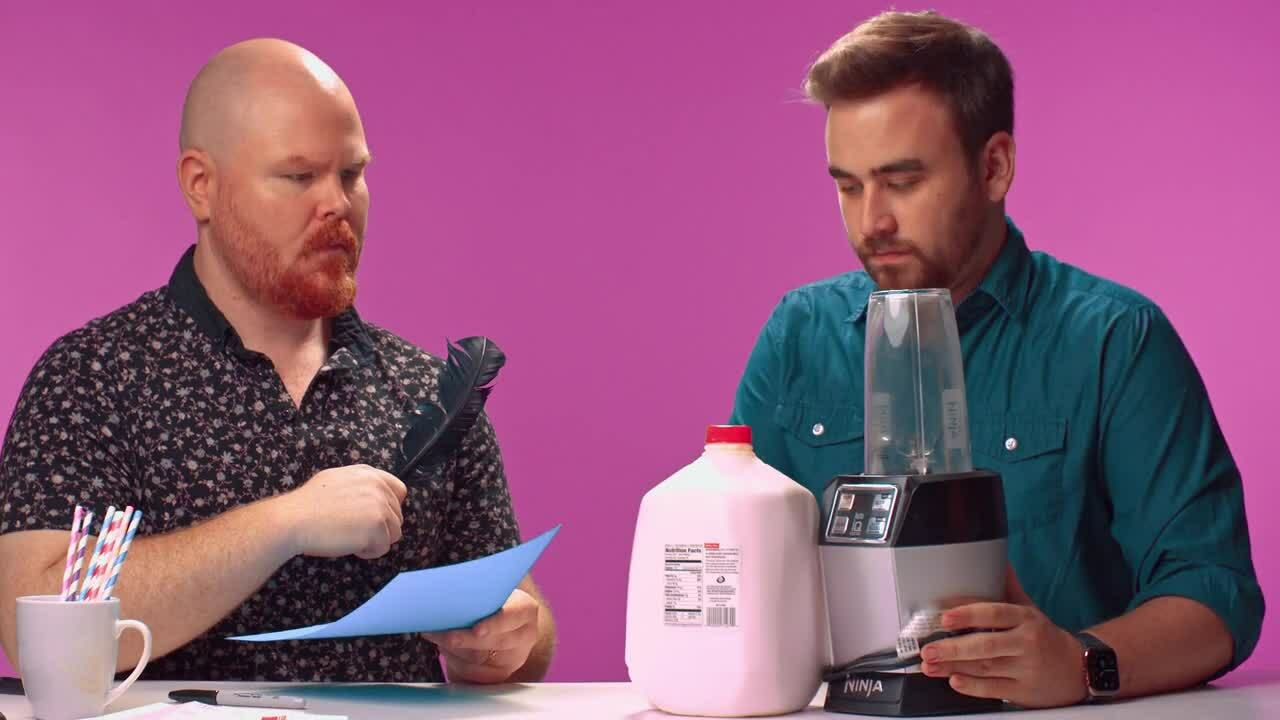
If you have the video production resources, creating a high-production video can give your BASHO email an even sharper edge. Try following along with this this prospecting video template to create top-quality videos that grab attention. Here’s an example by Failure Island.
Follow-up or Reminder Email
- What is it?: A message sent to a prospect you’ve already been in conversation with.
- When to use it: To recap a meeting, discuss next steps, or to reconnect with a prospect that’s gone dark.
- Goal: Refresh your prospect’s memory, make it easier for them to share key information with other stakeholders, and keep up momentum in a deal.
- Best practices: Use the information confirmation method to confirm all the relevant information and agree on next steps. (You’re not selling anything at this point, just verifying that all the information you have is correct to ensure that everyone is on the same page.)
Subject: [Name], thanks for chatting!
Hi [Name],
Thanks for chatting yesterday! It was great to learn a bit more about [their company] and the challenges you’ve been experiencing. I filmed a quick video recap to summarize our discussion, please feel free to share it with your team:
I’ve also attached some additional videos with more context about our approach, as well as a personalized proposal. If you have any questions, please don’t hesitate to reach out.
Looking forward to following up [next meeting day and time]!
Cheers,
[Your name]
Breakup Email
- What is it?: A message to get a response from a prospect you haven’t heard from in a while.
- When to use it: You haven’t heard back from a prospect after sending a few cold messages or a once-active deal has gone dark on you.
- Goal: Get clarity around a prospect’s interest. Best case, bring the deal back, but at a minimum, understand whether they want to continue the conversation.
- Best practices: In a breakup email, less is more. Keep it short and simple. Rather than pressuring the prospect to come back, the most effective messages show that you’re completely fine to walk away. If they start to feel worried about missing the opportunity, they’ll come back.
Subject line: Not the right time, [Name]?
Hi [Name],
I haven’t heard back from you, so I’m going to assume that now isn’t the right time or you’ve decided to go in a different direction.
Let me know if I can be of any assistance in the future, always happy to reconnect!
All the best,
[Your name]
Upsell or Cross-Sell Email
- What is it?: Introducing your customers to a higher-tier version of your product (upsell) or complementary solution.
- When to use it: It depends on the customer, but ideally begin conversations a couple of months before their renewal date so you have time to discuss options. Regularly check in to see whether their solution is meeting their needs.
- Goal: Persuade a customer to expand the scope of business they do with you.
- Best practices: Do your research, have a deep understanding of the customer’s needs, and be prepared to handle objections.
Subject line: Look at how far you’ve come
Hi [Name],
We’ve accomplished some amazing things together over the past [period of time], including [top three accomplishments].
I know you have big goals for the coming year and I’d love to figure out how we can best support you as you tackle your next challenges. Would you have some time in the next few weeks to discuss what’s top of mind?
Looking forward to connecting soon,
[Your name]

See the 25 sales prospecting tools that come recommended by sellers like you.
3 Tips for Writing Better Sales Emails, Faster
1. Use the 5 x 5 Rule
You want to spend enough time on your sales emails to make them great, but not waste too much time getting bogged down in the details. A good rule of thumb to follow is the 5 x 5 rule, where you spend five minutes researching your prospect and five minutes drafting the email. You can also adjust the rules depending on how personalized you want the message to be and how much time you have available—do 3 x 3 if you need to work quickly, or 10 x 10 if you’re writing hyper-personalized BASHO emails.
2. Automate Email Processes with Tools and AI
Got blank page syndrome? It happens to the best of us. Save time and get your creative gears spinning by using AI to help draft your sales emails. Check out our best AI prompts for sales, including tons of prompts you can leverage to generate great sales emails. Just remember to check over your messages before sending, because AI sometimes hallucinates—you don’t want it quoting stats that don’t exist or making promises you can’t follow through on. You can also use a plug-in like Grammarly to check for typos, help cut unnecessary words, and make your sales emails sound clear and compelling.
3. Let Your Video Do the Talking
If you’re like many salespeople, where you really shine is in conversation—that’s what makes video such a powerful tool to use in your sales emails. Using a video email means that you only need to write a sentence or two to introduce the content, the video can do the rest. It’s more personal, more enjoyable to consume, and allows you to transmit more information. You’ll save time and build a better connection with your prospect—win-win.
Writing Winning Sales Emails is Easier Than You Think
In a world where your prospects are buried under a veritable mountain of bland, boring emails, your messages have the opportunity to stand out with creativity, personalization, and uniqueness. Once you learn this formula for writing great sales emails, you can use it time and time again, no matter what the situation requires.
By mastering the art of the sales email and complementing it with personalized video, you have the chance to make a lasting impression on your prospects—leading to more meetings booked, faster deal cycles, and ultimately, more revenue.
[newsletter-form title=”Sign up for the Vidyard Newsletter for more guides, how-tos, tips, and tricks.”]