
 Video Messages
Record personal videos to reach more customers.
 Video Agent New
Automatically send personalized videos with agentic AI.
 Vidyard Hosting
Manage all your business videos in one central spot.
 Vidyard AI Avatars
Generate personalized AI videos at scale.
 Vidyard HubsSee All Features →
Curate and share your best videos in one branded page
 Prospecting and Intros
Stand out and improve response rates.
 Sales
SalesGenerate more pipeline and close more deals.
 Post-Sales
Keep customers engaged after the deal closes.
MarketingHost video content and convert viewers into leads.
 Converting and Closing
Connect with buyers and close more deals.
 Corporate Comms
Create and deliver an internal communications strategy.
See Vidyard in Action →
“Personalized Vidyard video messages drove an 8x improvement in click-through rates and a 4x improvement in reply rates.” Read More
 Blog
BlogThe secrets to virtual selling and video best practices.
Video Agent HubCase studies and how-to videos for every revenue use case.
 Help Center
How-to and help articles for all things Vidyard.
 Fast Forward
Expert advice on all things virtual selling.
 Use Cases
Explore real ways to use video across your business.
AI Resource HubGuides and ideas for using AI in your workflow.
 Case Studies
Learn how our customers win more with Vidyard.
 Live Workshop Series
Showing you exactly how to put video to work.






How to Use Real Estate Video Marketing to Sell More Property
Apr 17, 2023
·
9 min read

Chris Gillespie

Video marketing for real estate can help you stand out from other realtors, make connections with potential home sellers and buyers, and ultimately sell more properties.
As anyone who’s ever checked out a “spacious two-bedroom” in New York City and found it was just a shoebox knows, real estate photos aren’t always accurate. And consumers and buyers know it. Snapshots alone can’t really convey light quality, neighborhood vibe, or character. If your property has all those things going for it, you ought to show them off. You ought to use real estate video.
In the same way photography and the internet supercharged MLS networks in the 1980s so does video for transforming the business today. It’s allowing brokers, realtors, and agents to show, not tell, and to make a connection from half a world away. This translates into both commercial and residential sales. Today, 44% of home buyers start their search online, and 73% of sellers are more likely to list their home with an agent who uses video, reports the National Association of Realtors. Half of all brokers say real estate video marketing is a big part of their strategy.

Vidyard is the easiest way for real estate professionals to create and share video—for free!
Table of Contents
Why is Video so Effective for Real Estate Agents?
Agents that use video in their marketing efforts say it helps them:
- Explain things more clearly: It’s easier to show how spacious a property is.
- Book more meetings: Video messages (sent via email or social media) are 40% more likely to be opened, 37% more likely to be clicked, and 3x as likely to earn a response.
- Save time: Once made, videos can be reshared, and you can add custom introductions to make old clips feel new.
- Drive deals forward: Resolve questions faster, showcase more amenities, and cement a personal connection.
How Can Different Roles in Realty Use Video?
Video is also useful for people in a variety of realty-focused roles:
- Sell-side agents: Show your property in the best possible light.
- Buy-side agents: Attract leads with video testimonials.
- Brokers: Save time, develop your image and train agents.
- Builders: Increase demand and sell faster.
- Architects: Convey your property the way it was meant to be conveyed.
- Inspectors: Explain, capture, and document.
Video Marketing in Real Estate: 13 Creative Ideas to Get Noticed
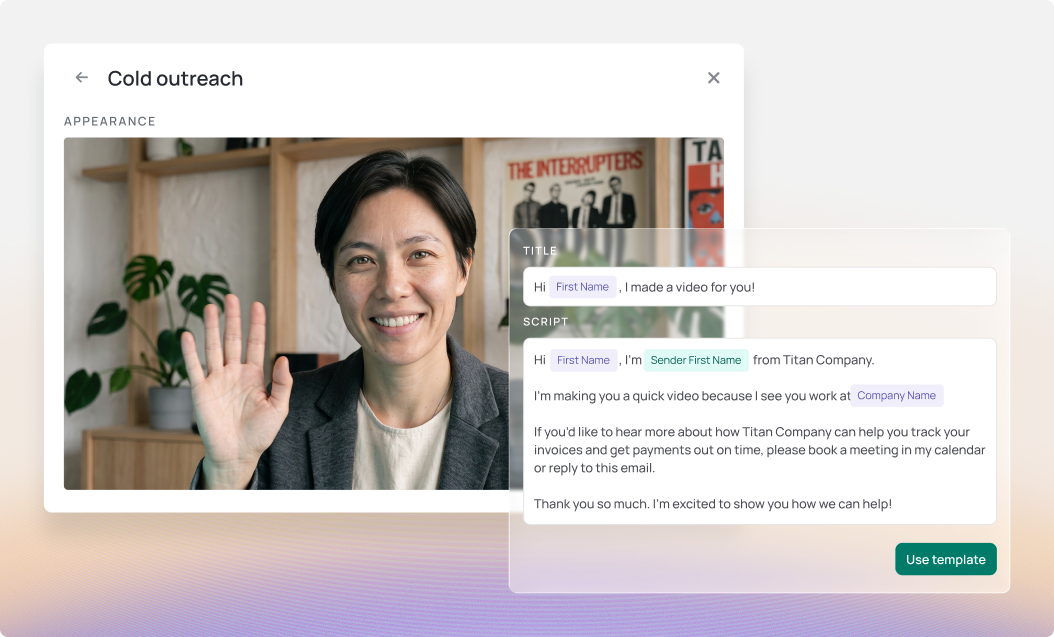
1. Send Cold Outreach Video Messages
Establish trust by sending video introductions. It’s unusual, so more likely to grab attention and gives you a chance to build rapport. Home sellers reportedly do less than three hours of research, and many of them hire the first agent they meet. Be that fresh face in their inbox.
Joe Balestriere, a Connecticut-based Realtor with William Raveis Real Estate, knows how valuable video can be for selling real estate.
“When communicating with a new client, video can create a serious advantage over the competition,” he says. “Match that with analytical data for a seller, and you stand above the rest.”
In this cold outreach prospecting video, the creative use of props helps to identify—and, more importantly, empathize—with a prospect’s pain points (or in your case, your client’s). This approach well positions an agent who can help clients overcome those obstacles.

2. Work the Algorithms in Your Favor with Social Media Videos
Cast a wide net by posting videos for real estate on social media—either to attract prospects who are just beginning their search or to market a property.
Despite the hoopla over how organic social media reach is declining, most social algorithms heavily prioritize video. For instance, Instagram video posts earn 38% more engagement than non-video posts. For Facebook videos, the advantage is 135%.
Ideas for Social Media Real Estate Videos
- Videos featuring properties just sold
- Videos highlight properties on the market
- Short testimonial videos
- Day-in-the-life video posts
- Quick videos to share an agent’s personality or expertise
Angelica and Aron Pinto, together Team Pinto at Re/Max Twin City Realty, are pros at making and sharing real estate videos. The duo shoots creative content that appeals to both home buyers and sellers, resulting in more clients and faster home sales. While many of Team Pinto’s competitors share only photo panning, they focus on creating quality video listings for their properties to capture and keep buyer attention. They’ve also created a video series called “Team Pinto Talk Real Estate,” where they educate their audience about real estate topics—a move that’s been great for brand awareness. Through their social video efforts, Team Pinto has grown their Facebook following to more than 1,700 people. Many of their Facebook videos have view counts that far exceed their number of followers, with some of their most popular having upwards of 55,000 views.
3. Let Your Happy Clients Do the Talk with Customer Testimonial Videos
Let your happy customers do your bragging for you by having them record short customer testimonial videos. Make a habit of asking to film short interviews at the high points in their buying journey—upon offer, upon close, and six months later.
These videos don’t need to be high-production value. You can accomplish a lot with a smartphone and a lavalier microphone. Save all these videos in a folder, and when you have time for marketing, cut them together into a series of testimonials around themes like buying or selling.
Questions to Ask Clients When Filming Customer Testimonial Videos
- How do you feel right now?
- How were you feeling a month ago?
- What does this mean for you?
- Would you recommend me to a friend? Why?
In this video from the Todd Riccio Real Estate Team, a happy couple who bought a house from the team talk about their experience.
4. Keep Deals Warm with Follow Up Videos
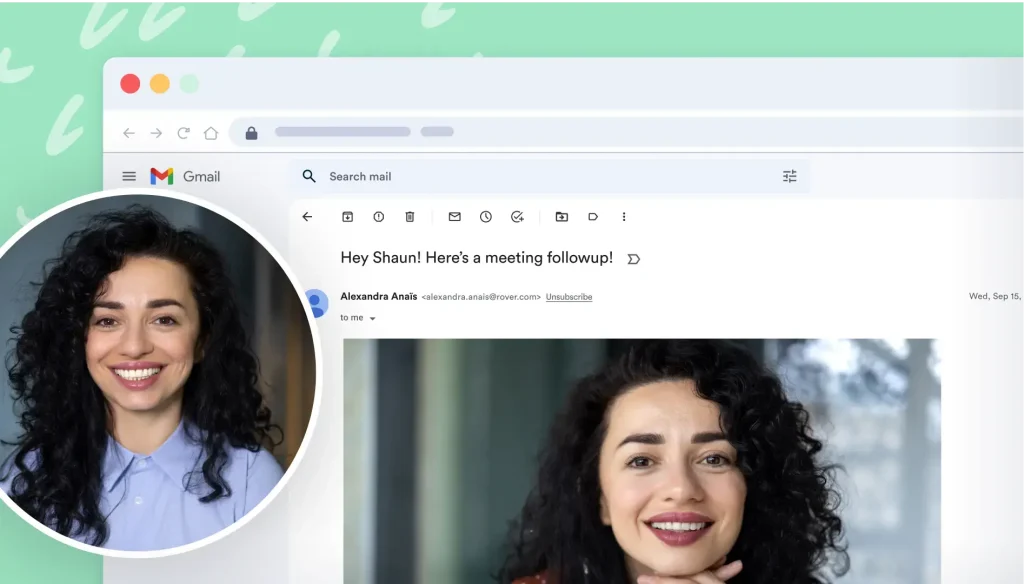
Email follow-ups are cold. Video follow-ups are hot. And, even though videos don’t take long to record, people get the sense that videos take more effort to produce and so perceive them as high value. “Wow, they took the time to record a video,” the thinking goes.
Video follow-ups can cement the relationship while highlighting the benefits of a property, and they can return to watch it again.
In this warm follow-up video, Ryan McGinnis, a licensed realtor with Provident Real Estate, reaches out to a potential homebuyer who’s requested some showings via the firm’s website. Note that Ryan explains why he’s reaching out and shows his face in order to establish a personal connection. See more of Ryan’s videos and get his top tips in this case study.

Vidyard is the easiest way for real estate professionals to create and share video—for free!
5. Neighborhood Video Tours Can Sell the Whole Picture
Pictures of a commercial property taken at high noon on a Sunday may make for clear photos, but they can also make the neighborhood look empty. Use video to capture the weekday bustle of the nearby food truck court, commuters streaming out of the subway, and the sheer number of people who stop to inspect the “Coming soon” sign.
This works just as well for residential properties: Capture the playground when it’s full, the school at lunchtime, and the waterfront walkway when it’s dappled in a sherbet-colored sunset.
Former sportscaster Jon Barr isn’t a real estate agent, but he does know how to make a great neighborhood tour video. And, with more than 149,000 subscribers on YouTube, it’s clear that viewers agree his videos are worth watching.
6. Bring the Listing to Life with Property Video Tours
Supplement your photography with a video tour to give buyers a feel for the environment and the flow of the place. You can create high-end virtual tours meant to live on the listing page, but you can also record personal tours. Use your phone and walk through the site explaining the amenities you know the buyer is the most interested in.
As an Associate Broker for Jackson Hole Sotheby’s International Realty, Des Jennings knows the value of video tours.
“Working in a market with a high percentage of vacation or second homeowners, video, and particularly video walkthroughs, are a critical component for retaining and communicating with clients,” he says. “Video creates a real-time touchpoint, and emailing new listings or calling on the phone just can’t match it.”
Real Estate Video Tour Pro Tip: Stage the space. Shut all the doors and closets, declutter, fluff the pillows, and remove pictures of the homeowners.
This gorgeous property tour video from Lifestyle Production Group shows what a high-production value walkthrough video can look like.
7. Share the Birdseye with Real Estate Drone Video Tours
The cost of hiring a real estate drone photographer has plummeted over the last few years—in some places, by as much as 90%.
Footage that cost $2,000 in 2015 now costs $175. Or, you can even procure your own low-cost drones and grab footage yourself. That makes it accessible for most properties and a big value add for realtors. Aerial shots are impressive and lend an air of glamor.
In this video, REtipster runs through five of the most popular shots to include in real estate videos, showing examples of each.
8. Let Your Personality Shine with Realtor Profile Videos
People buy from people they like, and you can pack your personality and value proposition into a short, 30-second “get to know you” clip. Place the video and a thumbnail image of it in your email signature so everyone has a chance to get acquainted.
Real Estate Video Pro Tip: Use the free video editing software on your computer (iMovie or Windows Movie Maker) to add your name, title, and contact information to your intro clip to help seal the deal. Or create a quick selfie-style video message with a free tool like Vidyard.
Tallie Lancey, a broker with Big Sky Sotheby’s International Realty in Montana, talks about her approach to connecting with clients.
9. Share Your Professional Expertise with Educational Real Estate Videos
Make buying easier by teaching your buyers how a deal should go down.
For first-time home buyers, post “Home buying 101” videos where you talk them through figuring out how much house they can afford, getting multiple rate quotes, or correcting credit report issues. For commercial buyers, whiteboard the financial benefits of a property as an investment and compare it to others nearby.
Real estate influencer Kris Krohn creates videos to educate his audience on a variety of topics.
10. Close Deals Faster with Property Contract Walkthrough Videos
All salespeople share a common experience: Your prospect gets the contract and goes dark. If you aren’t there to review it in person, it leaves the opportunity for misunderstandings and sticker shock.
Record a video of yourself walking through the contract and explaining the important clauses. Prospects will appreciate it (who likes to read contracts?), and you increase your odds of a response.
Ryan McGinnis, a licensed realtor with Provident Real Estate, reviews a contract for home buyers making their first offer. Using screen recording, he walks through the important points and makes it simple for the viewer to follow along. See more of Ryan’s videos and get his top tips in this case study.

Vidyard is the easiest way for real estate professionals to create and share video—for free!
11. Host Live Videos and Ask Me Anythings (AMAs)
For commercial brokers with niche clients, hold a live video session on social media to promote a property or investment strategy. On sites like Facebook, YouTube, Instagram, and Twitter (which all have a live feature), viewers will get to ask questions that you can answer. In some cases, everyone in your network will get a notification that you’re broadcasting.
Lisney, a real estate firm in Ireland, has created several Facebook Live videos doing virtual property tours. This approach gives their audience the chance to ask them questions about the home in real-time. (Watch the example below on their Facebook page.) [resp-image class=”alignnone wp-image-293697 size-full” upload-src=”real-estate-video-marketing-live-video-example-lisney.png” alt=”a broker from Lisney creates a live real estate video” width=”1519px”][/resp-image]
12. Use Real Estate Training Videos for On-Demand Learning
The best training is an in-person session with a seasoned broker. But if geography prevents that, or they’re always on the road, ask them to record videos. This could be a scripted “Selling 101” online video course or one-off videos taken from a smartphone. For instance, senior sellers can record videos before or after meeting with clients to talk through their strategy or explain why someone bought. Consider leveraging a video hosting solution and featuring your videos on YouTube for better reach and engagement.
Top real-estate educator Tom Ferry creates videos sharing advice, like this one that addresses common questions real estate agents get and how they should answer them.
13. Real Estate Companies Can Use Recruiting Videos to Attract Top Talent
Videos are interesting to prospective buyers, but they’re also interesting to future agents. Use videos to show off your company culture, share day-in-the-life stories that make the role relatable, and interview top-performing agents about what they like about the job.
When Should I Hire a Professional Videographer?
The rule of thumb is, do it yourself until you can’t. Scrappy smartphone videos are quick and efficient but can also be endearing—in a world where every other brokerage site is plastered with ultra-manicured videos that look like they belong on TV, videos that look like they’re coming from a real person can be a relief.
That said, there’s a time and place for professional videography. It depends on your audience. For luxury and high-end commercial properties, buyers expect nothing less than perfect. You could do it yourself with a DSLR and stabilizing equipment, but your time might also be better-spent prospecting. A video professional will know the ins and outs of producing great videos quickly.
Vidyard is the easiest way for real estate professionals to create and share video—for free!
How to Make a Real Estate Video that Sells
1. Use the Right Equipment
You can get an impressive amount of real estate video marketing done with just a smartphone and videography apps like Level and ProCamera, which can adjust your positioning and lighting.
But when you want high-definition real estate photography and videography, you’ll need a DSLR camera or mirrorless equivalent. Below is a good mid-range starter kit for agents:
- DSLR (Canon EOS Rebel T7i)
- Lens (Canon EF 24 mm lens)
- Extra battery
- Camera stand
- Real estate video software
- Slide rail (optional)
Pro Tip: Avoid the urge to use a fish-eye lens. It may make the room look bigger online, but you’re only setting your buyer up to be disappointed. If a video inspires lots of visits but few close, it could be a waste of time.
2. Spend Most of Your Time in Pre-Production
According to video producer Mat King, you should spend roughly 50% of your time planning, 20% of your time filming, and 30% of your time editing.
The more time you spend planning—staging the room, adjusting the lighting, testing the microphones, and thinking about the distribution—the faster everything else goes.
3. Write a Script But Don’t Stick to it
Much of the point of recording real estate videos is to show off your personality. Write a script and know the message, but when recording, explain things naturally in your own words.
4. Dress for the Audience
Wear clothing that’ll make you relatable to your audience. To people who don’t often wear suits, an agent who’s dressed too nicely can be alienating. And to professionals who only wear suits, an agent in plaid shorts and flip-flops can come across as unprofessional.
5. Use Subtle Background Music
Music that’s too loud or has a high beat per minute count can distract from what’s happening. Choose background music that subliminally supplements your message—that the property is fun, calm, inviting, unique, or elegant.
6. Use GIFs to Grab Attention
Add interest to your prospecting videos by including a video thumbnail featuring that enticing play button in your messages. To take it even further, make your thumbnail an animated GIF of you waving or pointing to something on the screen or in the background. Videos with GIF thumbnails earn more clicks.
Just as photos now seem obvious, soon, video marketing in real estate will seem old hat. Everyone will be doing it so well that we’ll be forced to come up with the next thing. (Perhaps augmented reality?) But until that time, video offers a killer advantage.
Video can mean more responses, more meetings, and faster deals in both commercial and residential real estate. And getting started? Well, that’s as simple as picking up your phone and hitting record.
Vidyard is the easiest way for real estate professionals to create and share video—for free!
This post was originally published on March 26, 2020. It was updated on April 17, 2023.